
20 Jul Ally Metzger – Ecology at RMBL – Week 2
Hello to everyone tuning in for the first time, and welcome back to those who’ve been following along! Just as a quick refresher, my internship is taking place at RMBL, a biological research lab located in the old mining town of Gothic, just outside of Crested Butte, CO. I am working in the Brosi Lab with Annie Colgan’s Team who study pollination ecology and more specifically, plant-pollinator networks (which I go into more detail with in my Week 1 blog post).
This is the second week of my internship, and it was mostly a continuation of the same research and tasks that I have been helping out with since my very first week. The big difference now, however, is that I have more experience doing these things with less guidance, which means my mentor, PJ, and I can get much more done!
As I mentioned before, PJ’s project is all to do with pollen and the nutrients that reside within it, therefore, if we want to study the pollen, we first have to collect it. What’s interesting is that each flower produces very different pollen, not just in its chemical makeup, but also in terms of its color, where it’s located in the flower, and the amount of pollen made. Some pollen, such as the pollen from heracleum maximum, is a light green, whereas the pollen from erigeron speciosus is a bright yellow. Other pollen, like that of heliomeris multiflora, forms in big clumps on anthers that stick straight out from the center of flower, whist the pollen in delphinium barbeyi is hidden behind the petals of the flower and forms in very small amounts. The differences in the amount of pollen each flower contains and where the pollen is located, are the main two factors that determine what specific technique is needed to remove and collect the pollen from each flower.
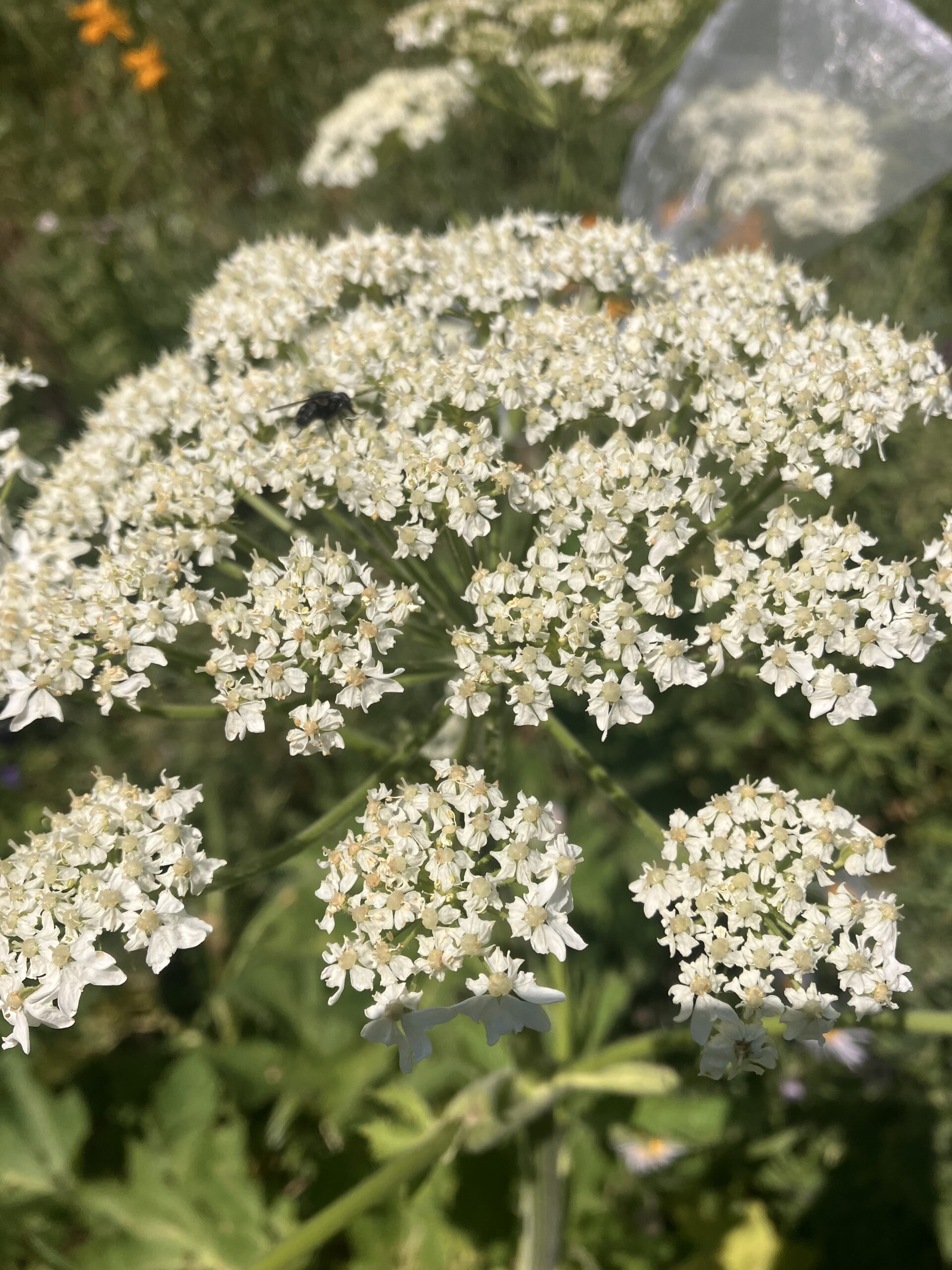
heracleum maximum
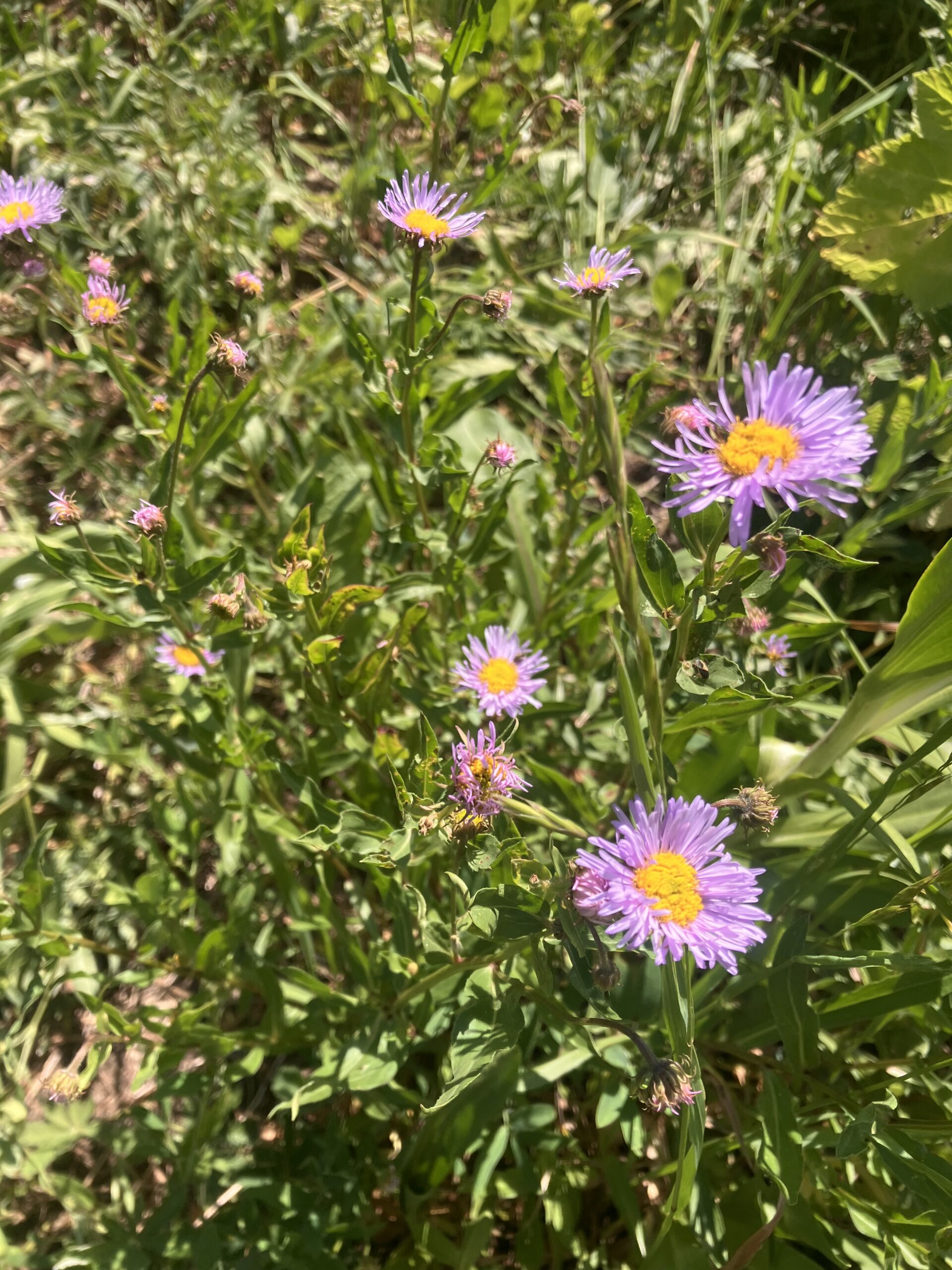
erigeron speciosus
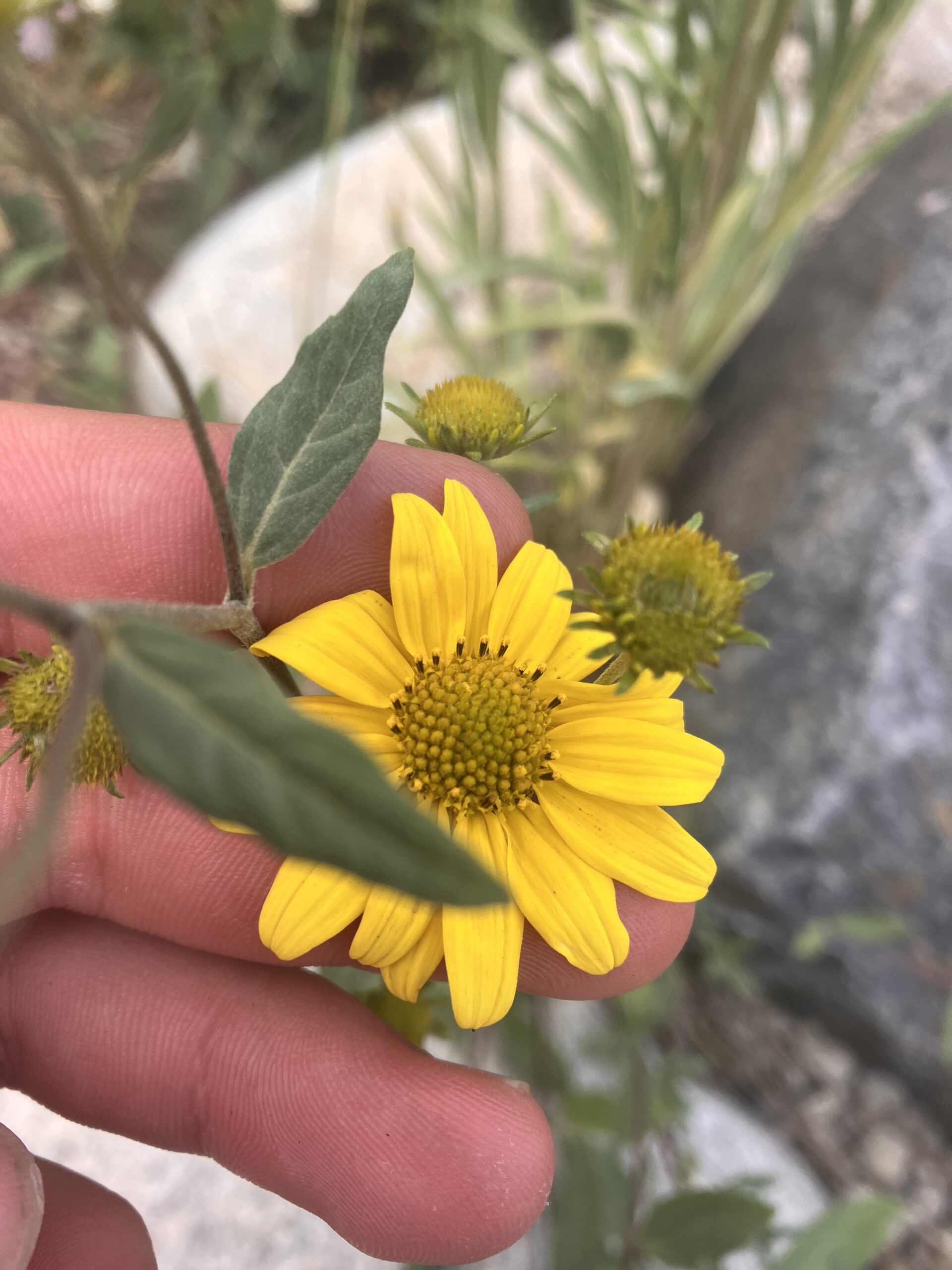
heliomeris multiflora
I’ve already said that we use makeup brushes to collect pollen from the anthers of the flowers and then to transfer it into microcentrifuge tubes, but we have a variety of brushes to use depending on how the pollen is attached to the anthers and where the pollen is in the flower. Stiffer brushes are used when the pollen is really stuck to the anthers, or when we want to purposely knock off anthers, with the pollen still attached, into the tubes. These brushes are usually used for the smaller flowers where there is not much pollen on the anthers. Fluffier brushes, on the other hand, are used when we simply want to lightly flick the pollen off the anthers of a flower. These brushes are utilized when the flower has a ton of pollen that comes off easily.
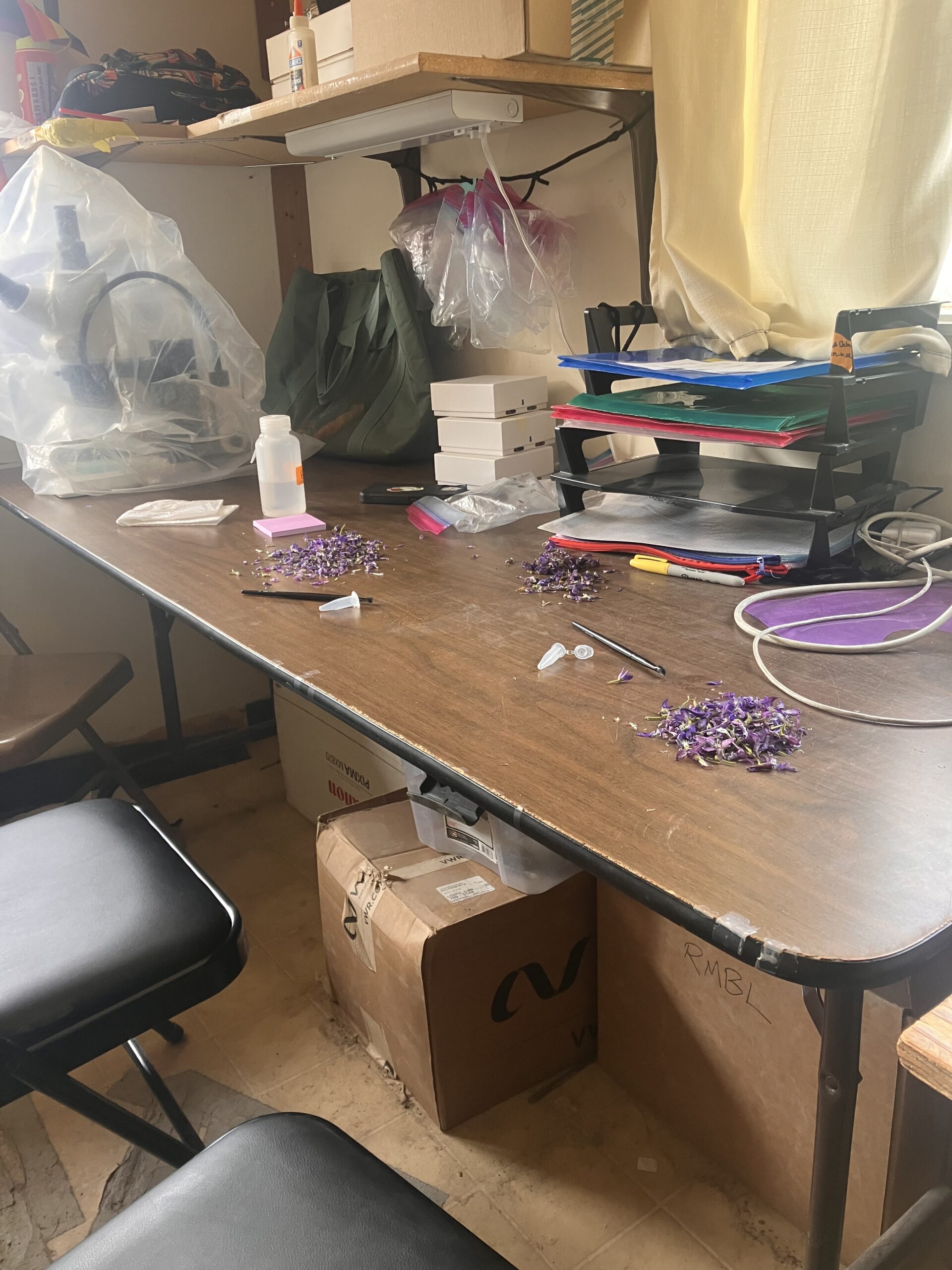
for delphinium barbeyi we have to tear the flowers apart to pull back the petals and reach the pollen, therefore we sometimes bring some back with us so we can collect pollen in the lab
Each week, for the flowers we want samples of pollen for, the minimum amount of pollen we must collect is ten milligrams. For some flowers, the ones that have anthers that are easy to access and are covered in pollen, this minimum is easy to reach. For others, typically smaller flowers that don’t have much pollen, it requires much more work. At the beginning of this week, PJ decided that we should ditch potentilla pulcherrima mainly because it was very hard to collect pollen from. This decision has allowed us to branch out and collect pollen from more species of flowers which offer more data points for PJ’s research (some photos of these new flowers are included above). It is very fun to be working on some new flowers!
Anyways, moving along, last week I started helping PJ with cleaning up the pollen from the field by using the Vortex and Centrifuge machines. However this week, I learned how to do the final cleanse and combining of the pollen we collect. This process starts by taking a tube with some pollen, that, depending on how many extraneous things were present within the pollen at the beginning, has usually been through the Vortex and Centrifuge machines to clean it out a little bit. Then, using an angler makeup brush, we swab the inside of the tube until a good amount of pollen is on the brush. Taking a paint scraper, we push the pollen off the bristles of the brush onto a plastic cutting mat. We examine the pollen to make sure that there are no anthers or bugs still in the pollen, and if there is, we use forceps to tweeze those things out. Then, using the paint scraper again, we try and scrape up the clean pollen spread on the cutting mat until it’s collected on the edge of the paint scraper (photos included below). Finally, we run the edge of the paint scraper along the lip of a brand new sterile tube where it rubs off and falls into the tube. If there is any pollen that is left on the lip of the tube, we carefully push the pollen with a brush until it falls in with the rest of the pollen. This is the final process of dealing with the pollen we collect because since we are laying the pollen out on the cutting mat, we are able to do one final check to make sure there are no impurities in the pollen we put into the final tube. This also means we are able to combine multiple tubes of the same pollen into one tube which creates very nice samples for PJ to study when she gets back to the University of Washington.
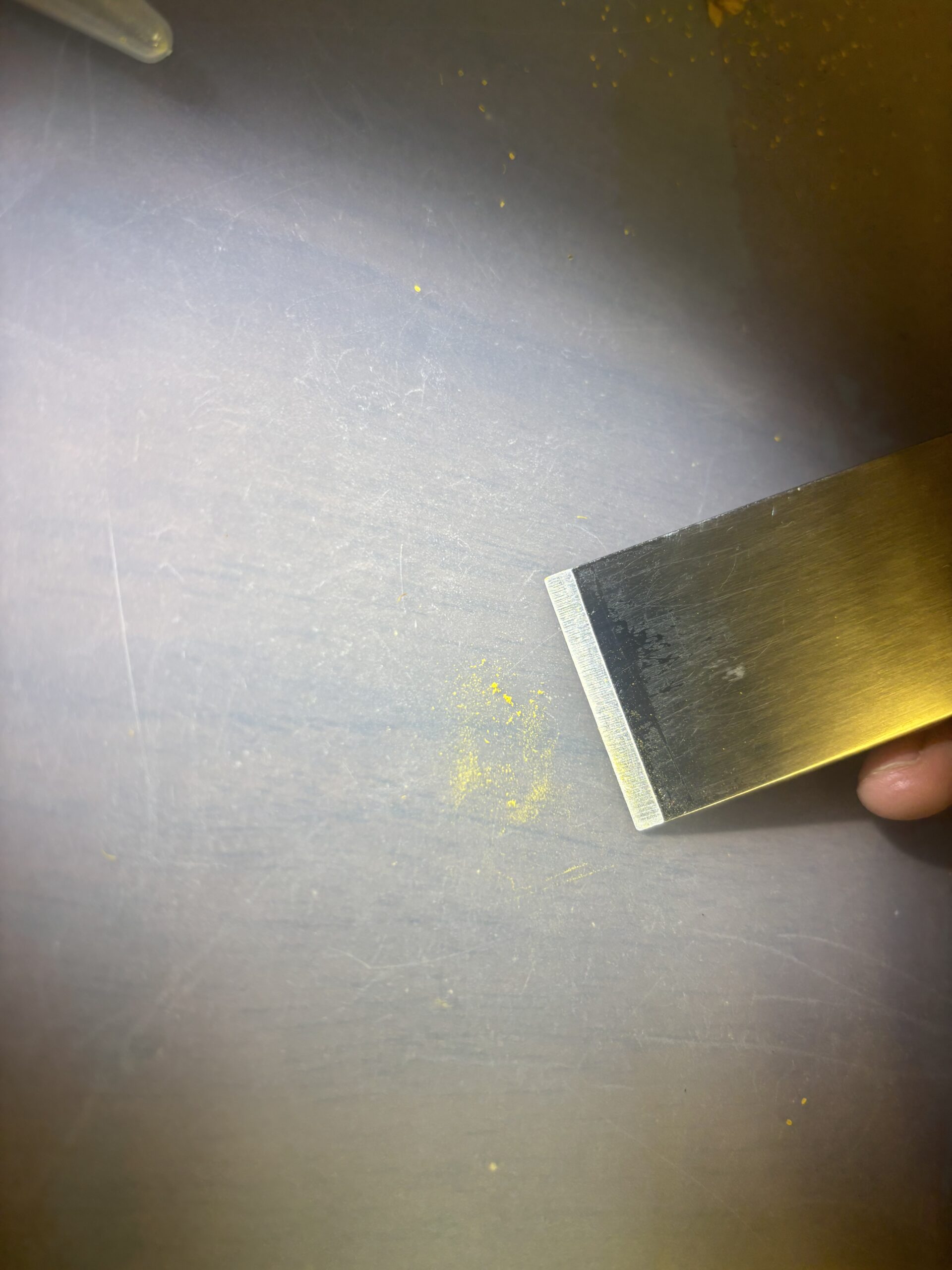
pollen on the cutting mat being scrapped up with the paint scrapper
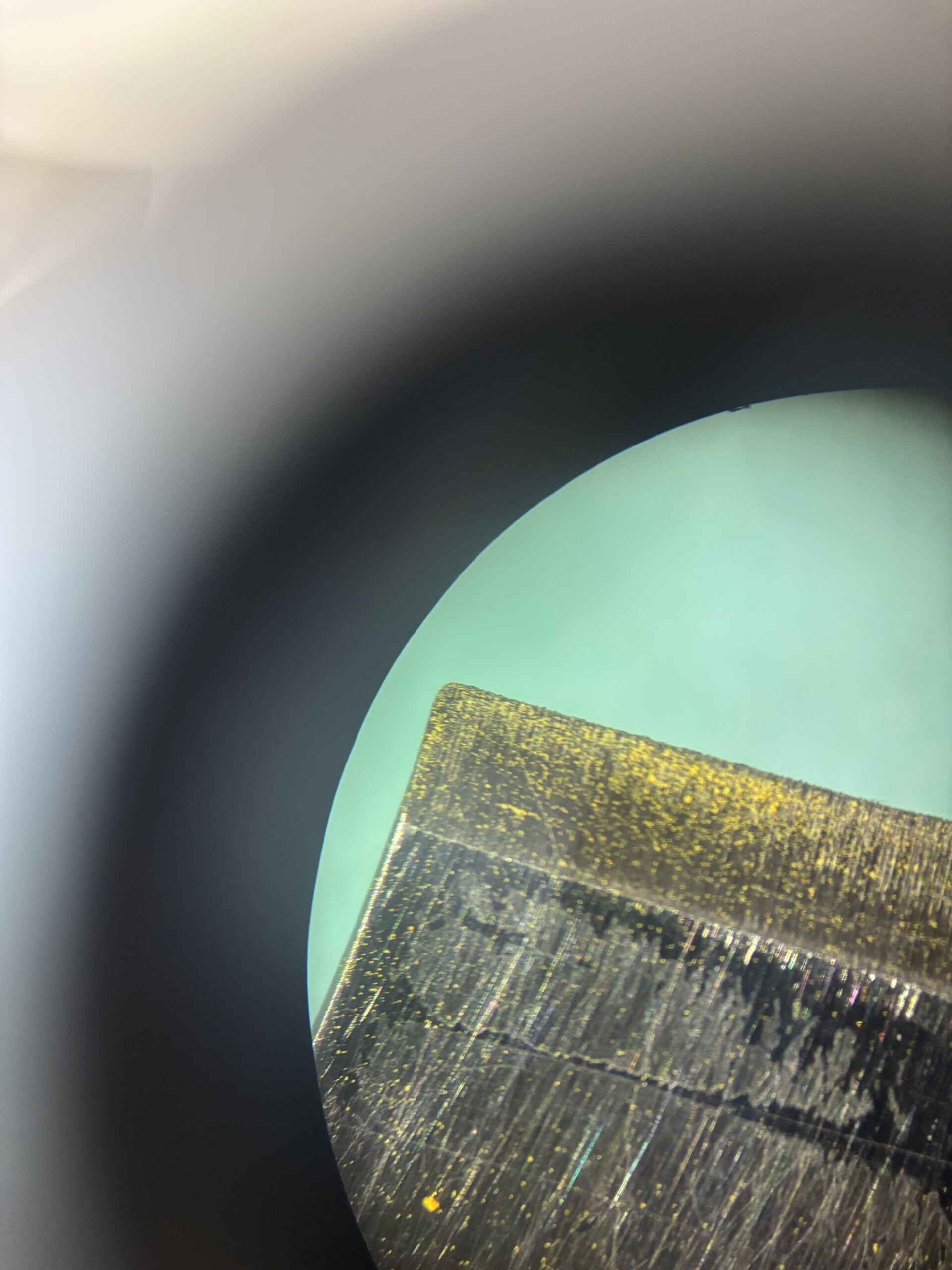
pollen collected on the edge of the paint scrapper
I did not get to help out Annie’s project this week as the day I was supposed to help sample, a ton of smoke from the surrounding wildfires blew in. Annie and many girls on the team were supposed to make a trip up to the high-site, which is another place with plots of land to observe and catch bugs, just at a higher elevation. During this time, while Annie’s Team was up at the high-site, PJ and I were supposed to go help sample another site very close to the lab and in easy driving distance. However, since visiting the high-site requires a long hike that is very physically demanding, and with the air quality being so bad, it wasn’t safe to make the trek. So instead Annie’s team went to sample the closer site we were originally planning to sample, while PJ and I stocked up on some of the pollen we needed. However, later in the week, I did help fix up some old plots at another site I’d never been to before. This involved hammering in stakes and then measuring out the correct amount of string to mark off the plots of land. We then went back through to label smaller sections, within the large plot, with tape.
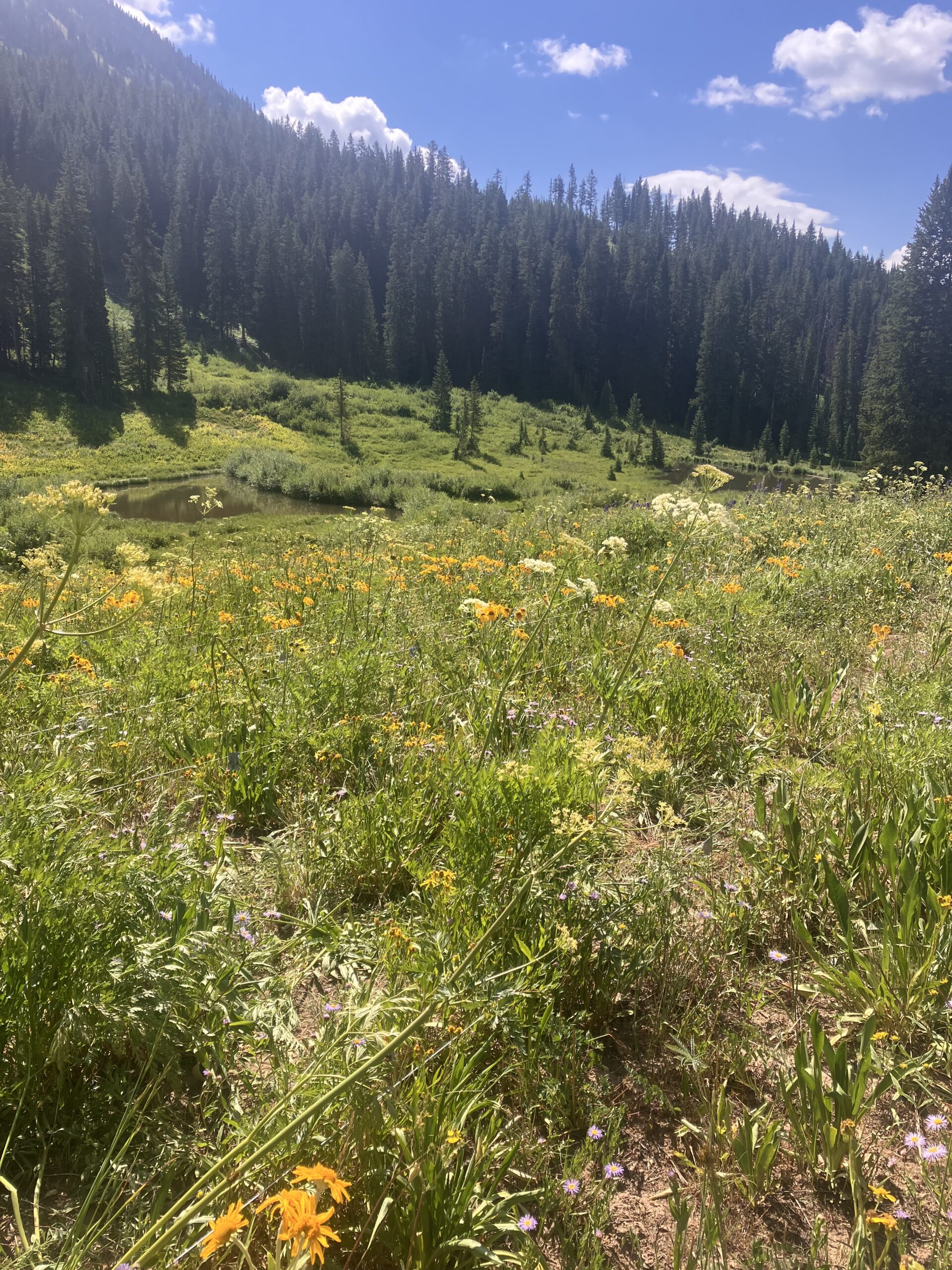
setting up new plots at a new site
In terms of exciting things outside of the internship, my mom visited for a little on Sunday, and we hiked a beautiful trail called Teddy’s Trail that starts right at the Snodgrass Trailhead. The wildflowers were absolutely gorgeous between the Aspen trees! Then on Thursday evening, some family friends came over to see and visit the Crested Butte area with my family. We all had dinner and ice cream in the Town of Crested Butte. It was super fun and it was great to see them! I’m also planning to go hike with one of the girls from the Brosi Lab sometime here soon, so I can’t wait for that as well!
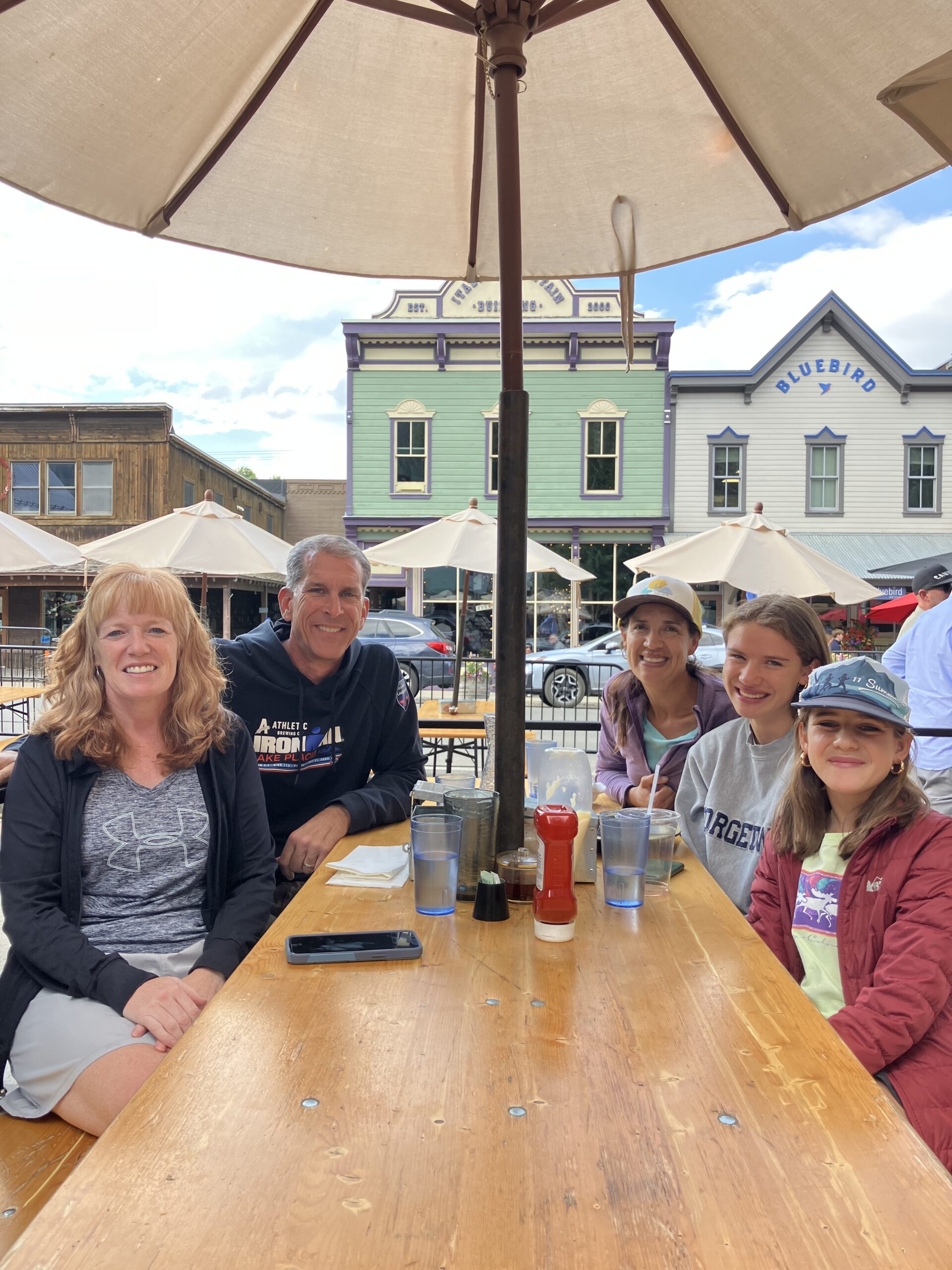
having dinner with family and friends in the Town of Crested Butte
Well that wraps up week two! It’s so great to be finally getting the hang of what I am helping out with while I’m here, and even more incredible that I am still getting to experience so many new things too! The most amazing thing about outdoor field work is that everyday is completely new and unpredictable, in both good and challenging ways, but it keeps me on my toes which I have really been loving! I can’t wait for next week!
No Comments