
Hi everyone! This is the first week of my internship at RMBL, an amazing field research station located in the small town of Gothic, just outside of Crested Butte, CO. This is truly such an incredible opportunity I have been given, and I can’t wait to make the most of my time here!
This week has mainly consisted of me learning the ropes of the specific research that I am fortunate enough to be helping out with. While there are many kinds of research that take place at RMBL, I am privileged to be helping out Annie Colgan’s Team (The Brosi Lab) with their overall investigation of how plants and pollinators interact to form what is called a network. A network is essentially a complex map of links between pollinators and the plants that they visit to pollinate (a simple example is included below). With this information we can then start to understand how the plant-pollinator community is structured, and what might happen if something were to change in the environment. Since both the plants and the pollinators get something out of their interactions with one another, plants get pollinated, pollinators get food, this is referred to as a mutualistic relationship. This is why it is so imperative to understand how the plant-pollinator community is setup, as if something happens within the network, such as a species of pollinator becomes extinct, then that potentially has a ripple effect across the entire network that affects not only the pollinator side but the plant side as well.
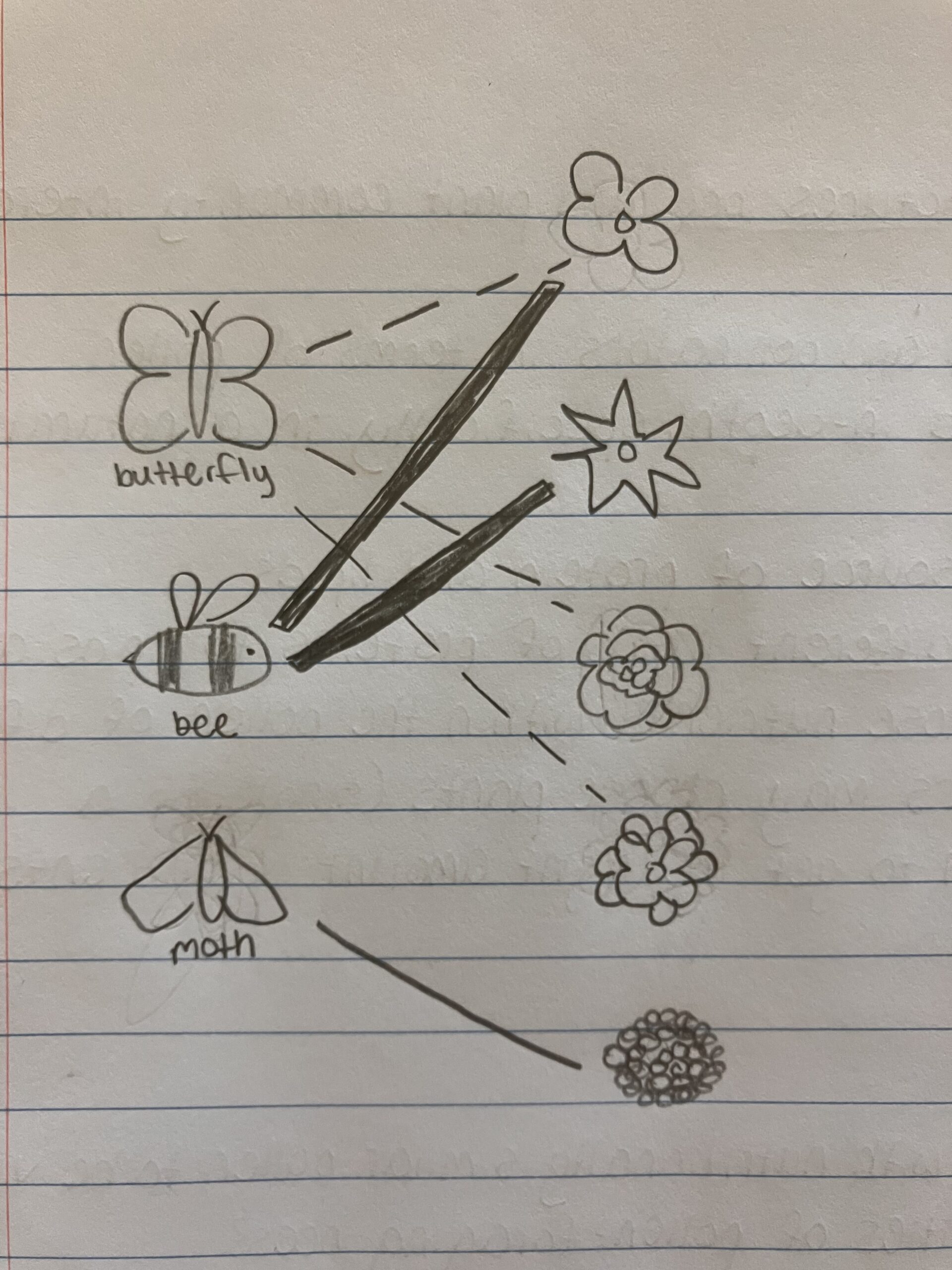
a very simple example of a plant-pollinator network (pollinators on the left and plants on the right), each pollinator has certain plants they like to visit (shown by the lines) and those plants rely on the pollinators that visit them to pollinate them
Within this broad topic, I am working with my incredible, funny, and smart mentor PJ Jones, who is a postgraduate student at the University of Washington. PJ is investigating whether the nutrients in pollen might have something to do with why certain pollinators choose certain plants within the network. Many people may have heard the statement that bees are attracted to a certain color of flower which is why they choose to visit, lets say, a purple flower over a different colored one. This is inherently the same idea, but instead of color determining what flowers the bees choose, we’re exploring whether the chemical makeup of pollen in different flower species is a determining factor of why bees visit some flowers over others.
Right now, I have been helping PJ with collecting and gathering samples of pollen from many different species of flowers including, potentilla pulcherrima, delphium barbeyi, helianthella quinquenervis, and erigeron elatior (photos included below). This has involved using makeup brushes and sterile microcentrifuge tubes to brush pollen off the anthers of the different flowers, collect it, and then bring it back to the lab. In the lab we take the pollen within the tubes and clean it up, in a sense. While we are outside collecting pollen, many things end up in the tubes that we don’t want, including the anthers of the flowers and sometimes very small black bugs. Therefore, we can clean those unwanted things out by first using a Vortex machine, which rapidly mixes the contents of the tube and sends the heavier stuff to the bottom while the pollen sticks to the sides of the tube. And once the tubes are cleaned out, besides the pollen, we can then put them in a Centrifuge, which spins the tubes around and moves the pollen from the sides of the tubes to the bottom in a neat pile. Once this is done, we have very nice samples of different kinds of pollen.
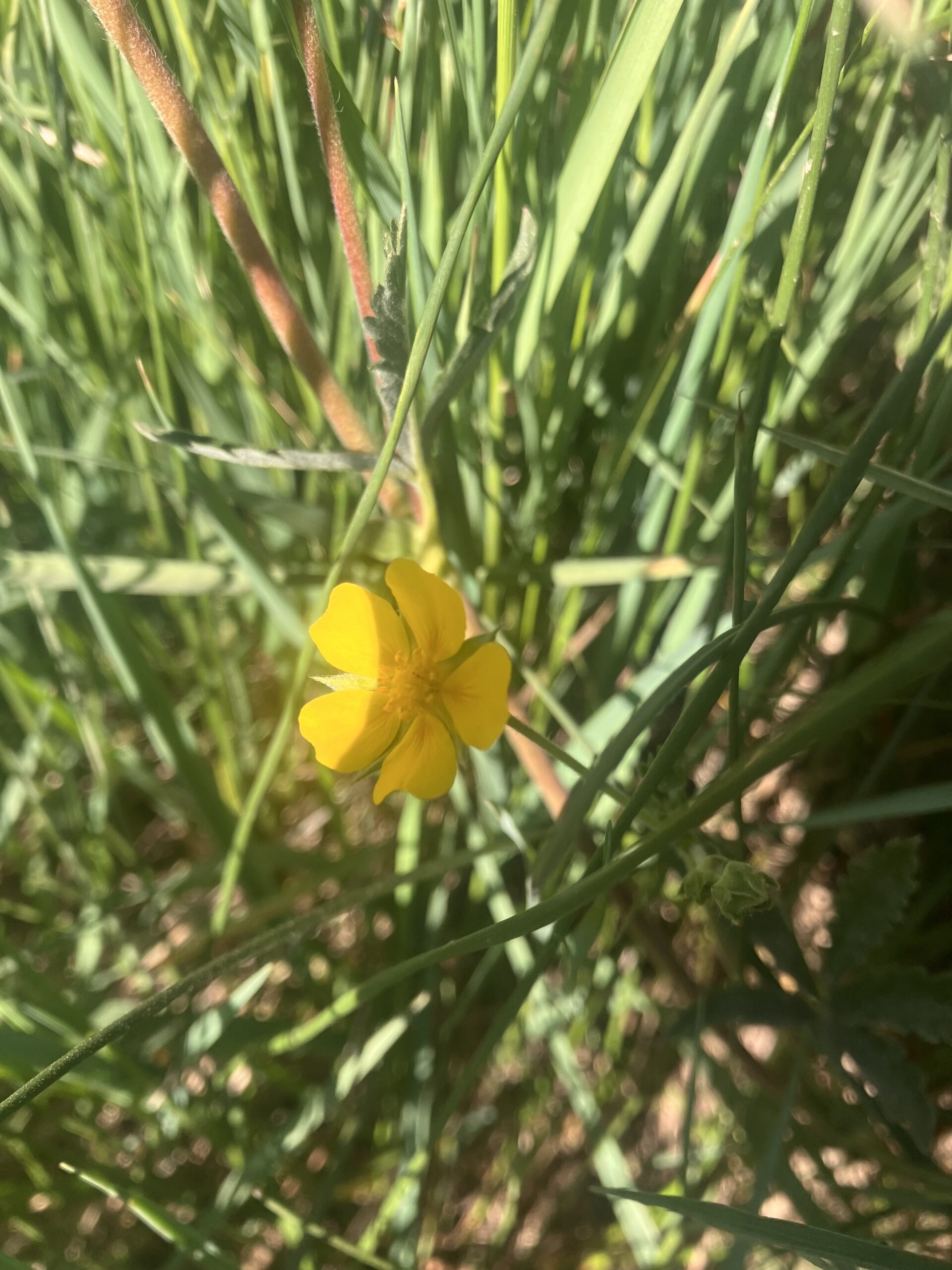
potentilla pulcherrima
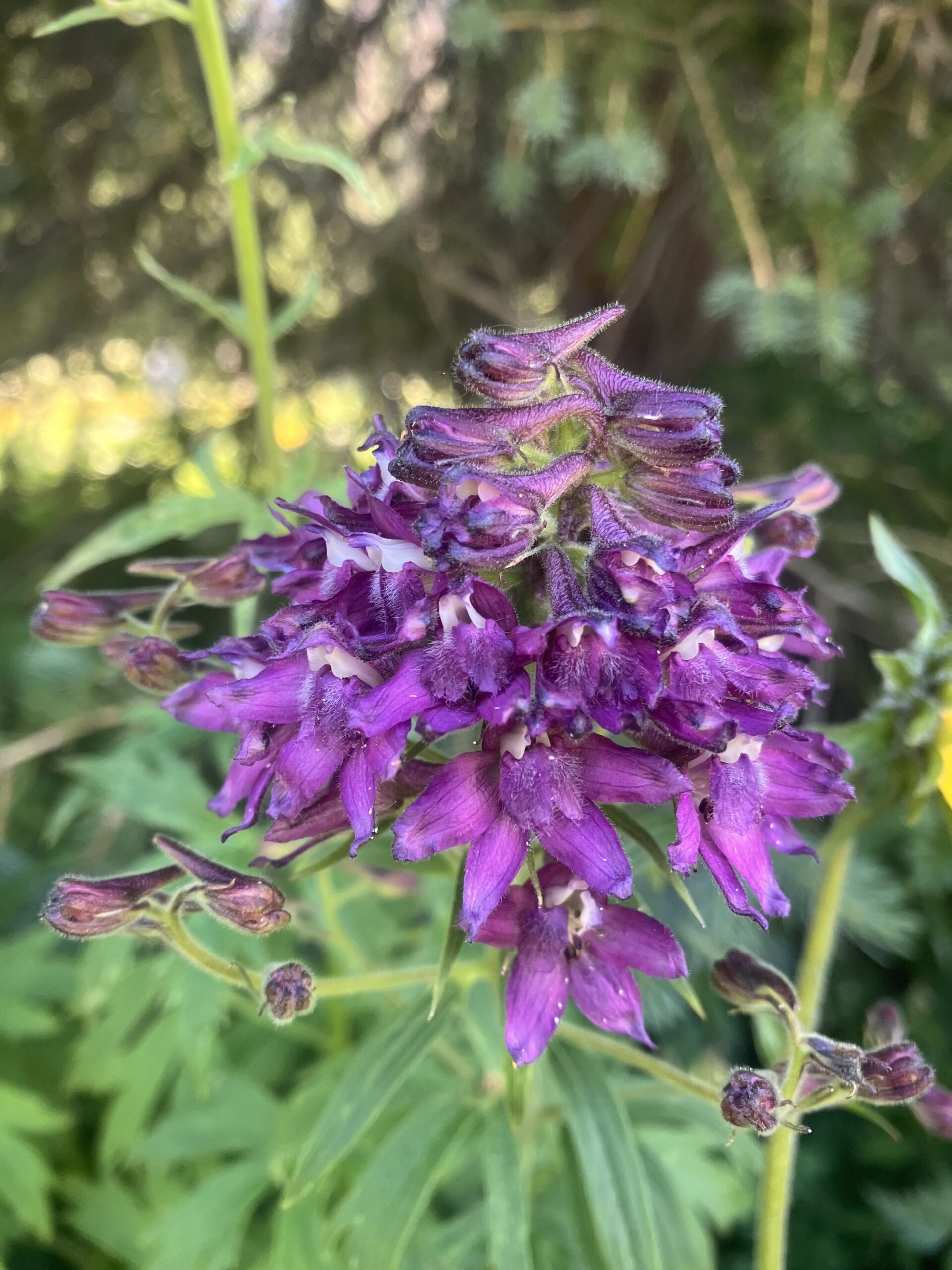
delphinium barbeyi
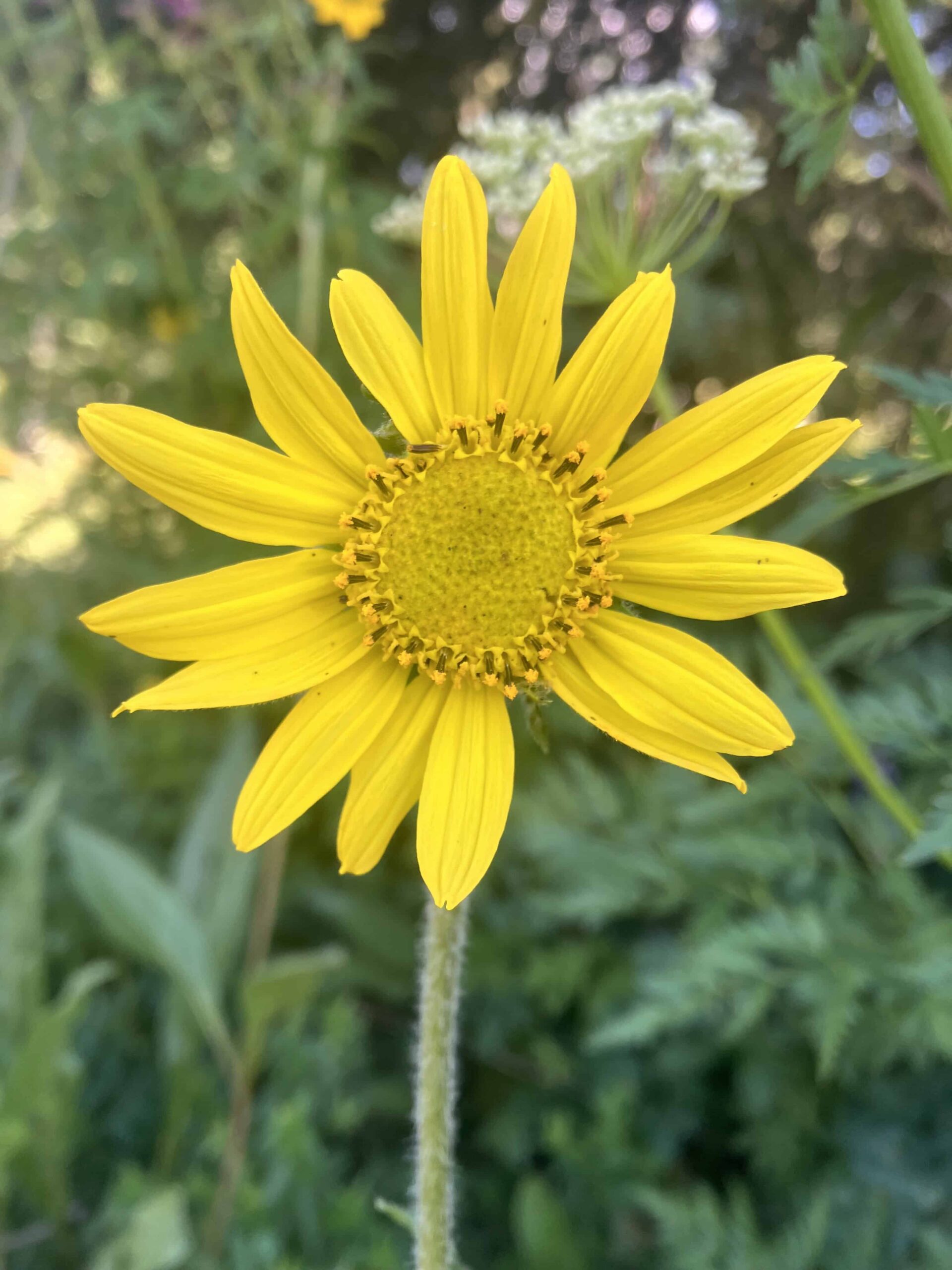
helianthella quinquenervis
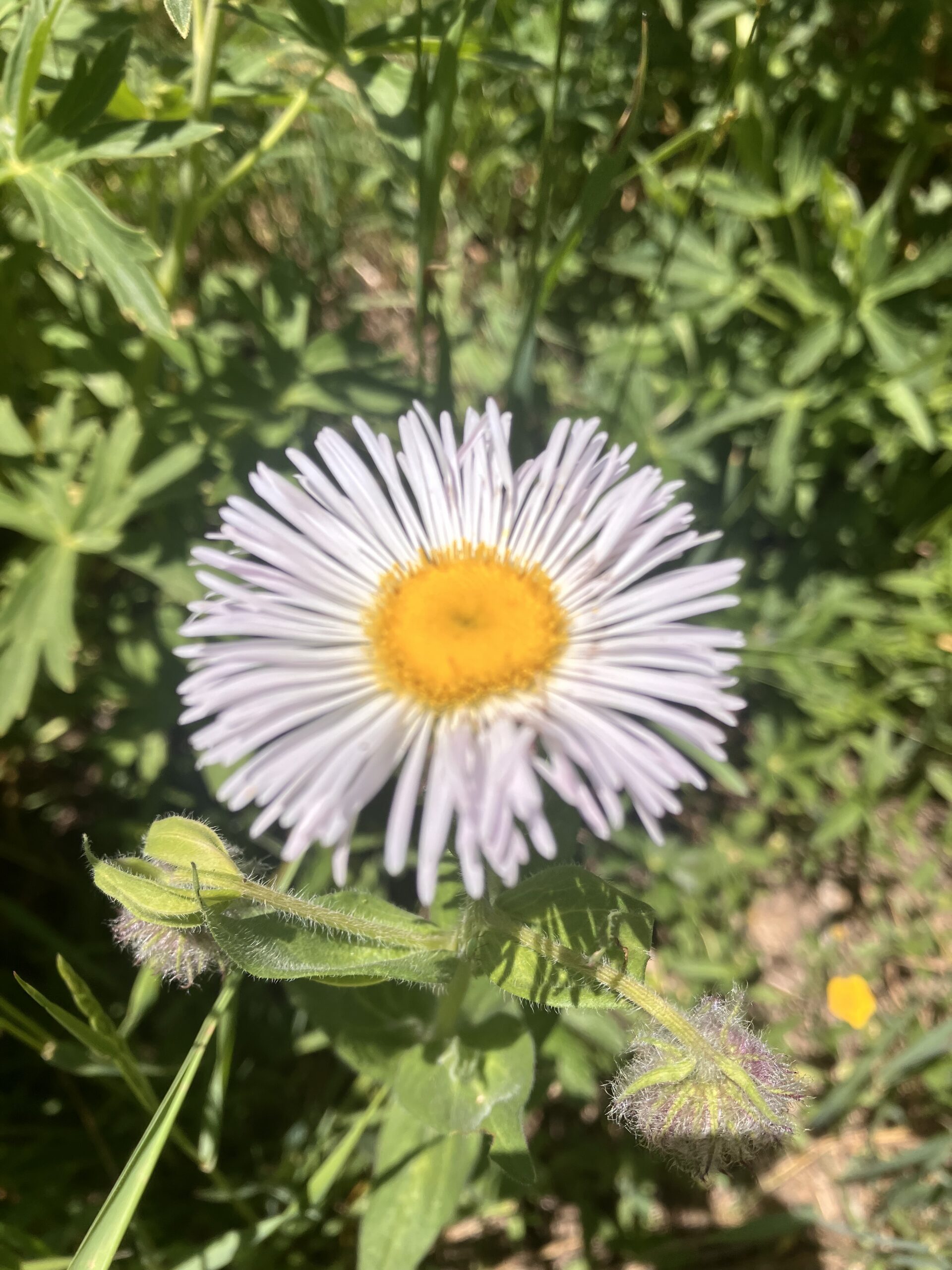
erigeron elatior
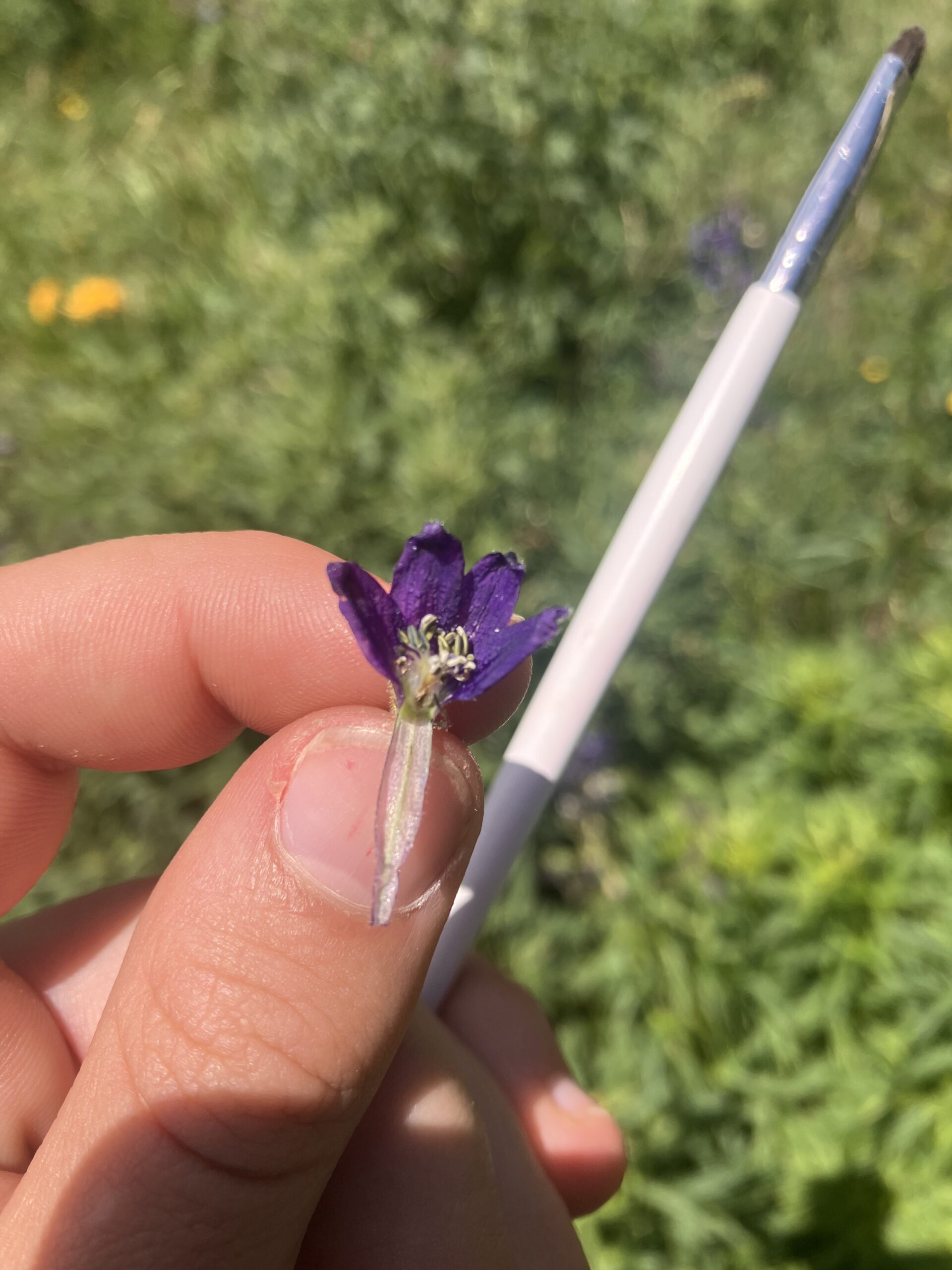
using a makeup brush to collect pollen from the anthers of delphinium barbeyi
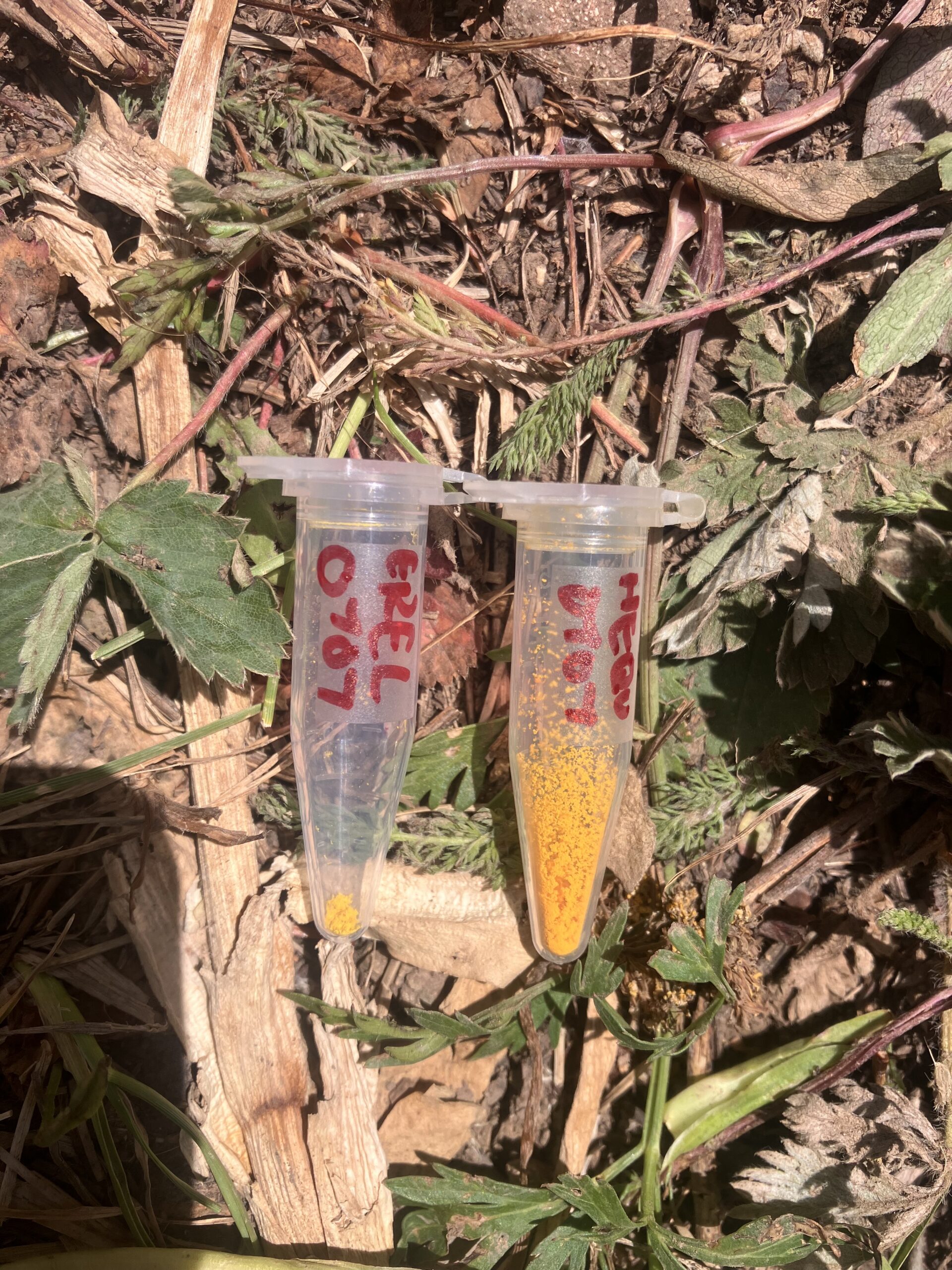
microcentrifuge tubes filled with pollen (pollen on the left from erigeron elatior, pollen on the right from helianthella quinquenervis)

getting a walk-through of how to catch bugs with a net
The other project I have been able to help out with this week is Annie’s project, which consists of observing what flowers pollinators interact with, and then what happens to those interactions if something in the environment becomes unfavorable. To do this, we watch a designated, marked plot of land for a total of three minutes. If we see a pollinator interacting with a flower, we catch it in a net, put it in a tube with a paper towel soaked in ethyl acetate (as long as it isn’t a bumblebee), which causes the pollinator to asphyxiate and die, and then we note what flower it was visiting. We do this multiple times at different plots of land until we get a data sheet of all the pollinators we caught and what they visited. Then we do multiple rounds, some with no alterations in the environment, those are control rounds, and some where we spray Quinine, a tonic water with a bitter taste to pollinators, on certain species of flower to see how that manipulation affects what flowers pollinators go to.
In my free time, outside of the internship, I have tried to get out and about to explore the area! On Sunday I went to the Farmer’s Market in the Town of Crested Butte with my amazing roommate Celine. It was very busy, but the fresh produce was totally worth it! Furthermore, the amazing team that I am working with at RMBL has truly made me feel welcome! On Monday, we went to a local ice cream shop called The Tincup which makes their own homemade ice cream and has some really funky flavors. Then, on Friday, we went and played Ultimate Frisbee at Rainbow Park in the Town of Crested Butte, which was super fun! I am so lucky to be surrounded by such incredible people!
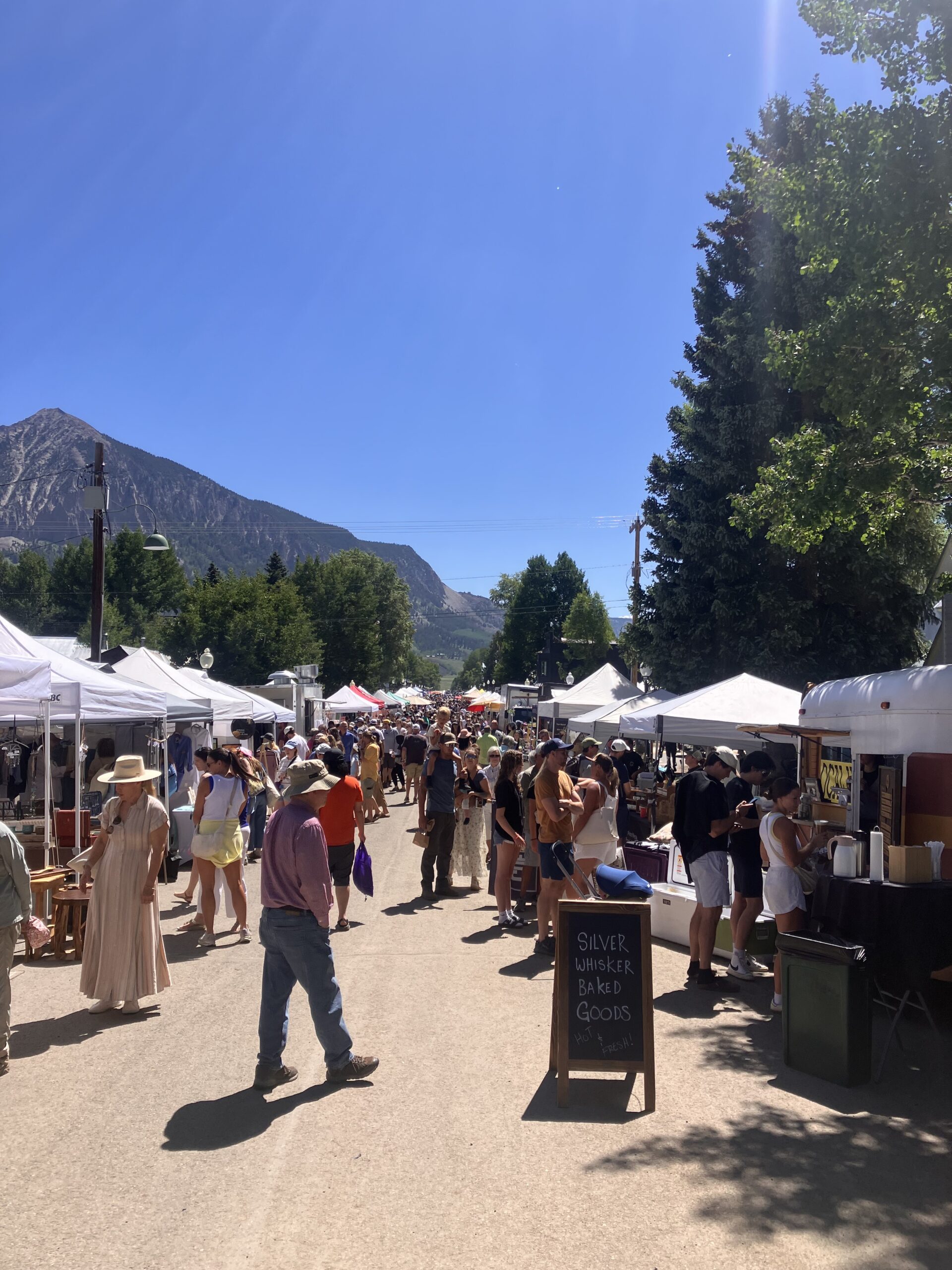
Farmers Market in the Town of Crested Butte
That about sums up the first week of my internship! I’m so excited to see where the next few weeks will take me!
There are no comments published yet.