
Hi everyone—my name is Hugh Hatcher. This week at LASP (Laboratory for Atmospheric and Space Physics) in Boulder, Colorado, I continued working with Dmitry Vorobiev and the rest of the team on our ongoing UV fiber-optics project.
To start this week we made another improvement to our experiment set up to help our results by making a “wind block” (featured image bottom right). One issue we were having was while pumping nitrogen back into the chamber it could blow the fiber around within the chamber. So by creating a block that dispersed the nitrogen so it was no longer directly blowing the fiber we were able to solve this issue. This helped increase repeatability, improve pump up time (As we could use a higher PSI to refill the tank faster), and keep the fiber in better condition.
This week of tests focused on repeatability. To validate our earlier results, we needed to show that the fiber’s performance was unaffected by the procedures we use to collect data. Last week, we worked on demonstrating the consistency of the “peak-up” process:adjusting the fiber’s position on the lamp side to maximize transmission. This week, our focus shifted to repeatability in the cut-back process. Specifically, we wanted to show that we could remove the fiber from the vacuum chamber, trim it by a small amount (only about a centimeter)and then reinstall it while still getting reliable, consistent measurements.
This is an important step in confirming that the act of handling and cleaving the fiber doesn’t introduce significant variation in the data. After each cut and reinstallation, we pumped the chamber down to the same pressure and ran spectral scans across the full 50–400 nm range. The results were generally very consistent, with only minor differences from cleave to cleave—well within what’s expected due to slight changes in the fiber endface. These small variations actually helped confirm that the setup is sensitive enough to detect real differences, while still being stable and repeatable. Overall, this week’s tests gave us more confidence that the cut-back process itself isn’t introducing significant error, and that we can continue shortening the fiber and collecting reliable data at each step.
Also, CJ and I got to contribute to the scientific paper being written on the fibers which was very interesting as I learned about the proper language and formatting used in scientific papers as well as what is important to include when describing a scientific process.
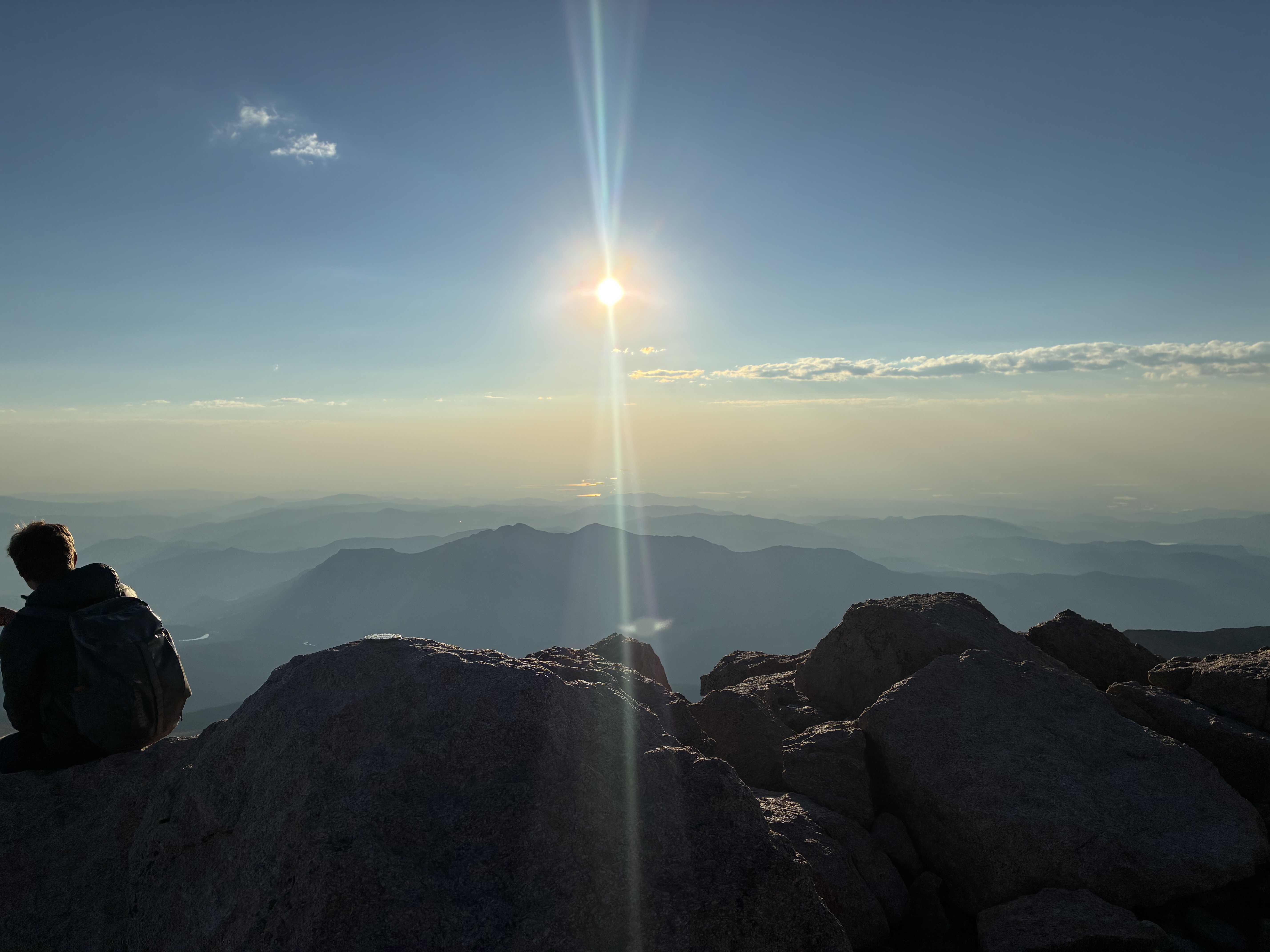
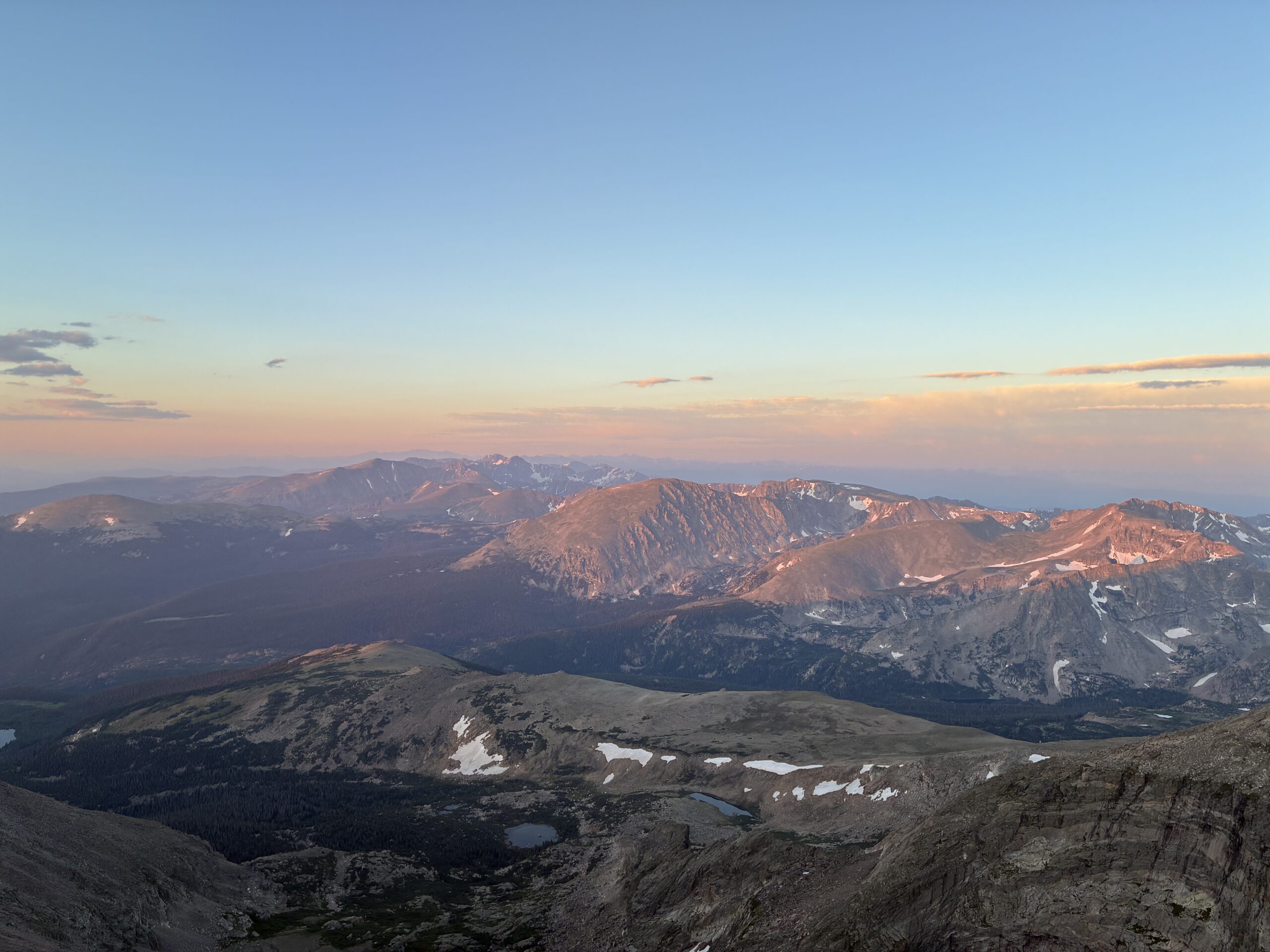
Outside of the lab, CJ and I did a large hike this weekend by summiting Longs Peak. It was pretty challenging as we had to start hiking at 2:00am to avoid the afternoon thunderstorms and were only running off of three hours of sleep but the view were definitely worth it.(Pictures attached)
There are no comments published yet.