
Hello hello everyone! This is a recap of my third week here at RMBL, a biological research station located in the historic mining town of Gothic, just outside of Crested Butte, CO. To recount, I am working in the Brosi Lab with Annie’s Team and my amazing mentor, PJ, to study pollination ecology. This includes the broad study of plant-pollinator networks, as well as niches within that, such as studying the variations in the nutrients of pollen between different flower species, and how that might affect what flowers pollinators choose. This is the topic that PJ is specifically studying and as such, the subject that I am helping her out with too. There is a great deal more to this field, but these are the investigations that are currently taking place in the lab, and the research that I am privileged enough to be helping out with during my time here.
This week got off to a slow start because of the weather. Since all the research here generally takes place outside, seemingly small disturbances, such as some rain, can throw off the plan for an entire day. For our research in particular, this poses an issue because pollinators do not come out in the rain, which puts Annie’s project on hold, and most flowers that contain pollen exposed to the elements, lose that pollen in the rain, which means PJ and I can’t continue to gather more samples for her project either. Therefore, on Monday, I did not go and help out at RMBL, and instead had an extra day to myself, which was nice, but meant PJ and I had more catching up to do later in the week.

fog around Gothic on Monday
Fortunately, Tuesday and the rest of the week had much better weather. The first half of this week was spent at a site called Avery’s Picnic, which is actually the very first site I ever went to. This site is on a hillside overlooking the river and the rest of the valley, with forest surrounding the site area. The second half of the week took place at the site I helped set-up last week, called Filer’s Ridge. This site is set up on a fairly flat section of land with little tree coverage.
What’s interesting about visiting different sites during the week is that this pollen data may reveal more about pollen than initially expected. Not only will the samples of pollen I am helping to collect possibly be able to reveal a common factor between the pollen of flowers and why certain pollinators visit certain species of flowers over others, which was the initial goal, but these samples, being from different plots with slightly different environments, and taken week by week as the plant moves through its flowering cycle, will also provide information on how pollen may differ slightly between the same species of flower at different periods through its flowering cycle and at different elevations exposed to different environmental factors. This just means that more may come out of this data than I originally thought, which is exciting!
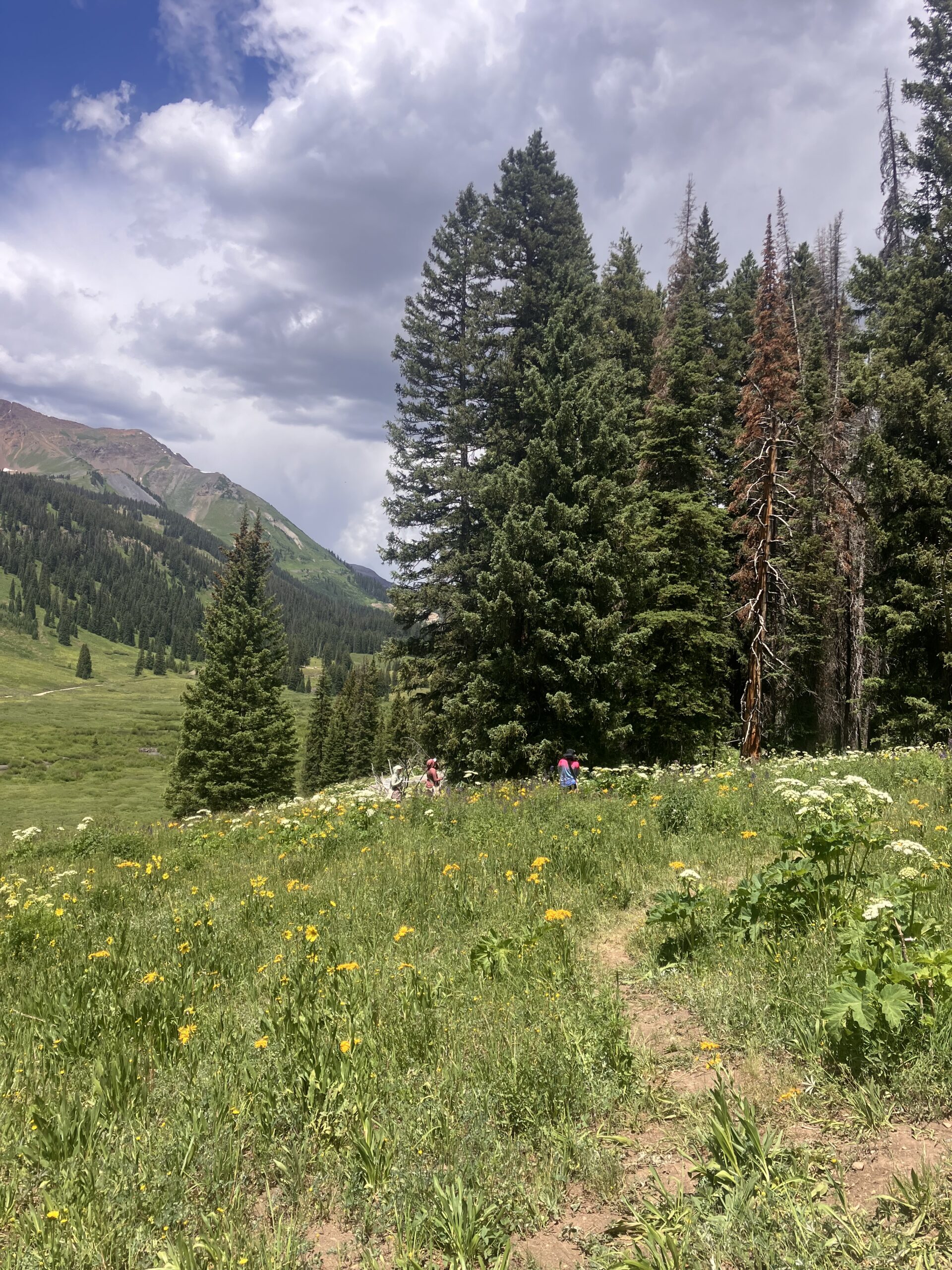
Avery’s Picnic Site
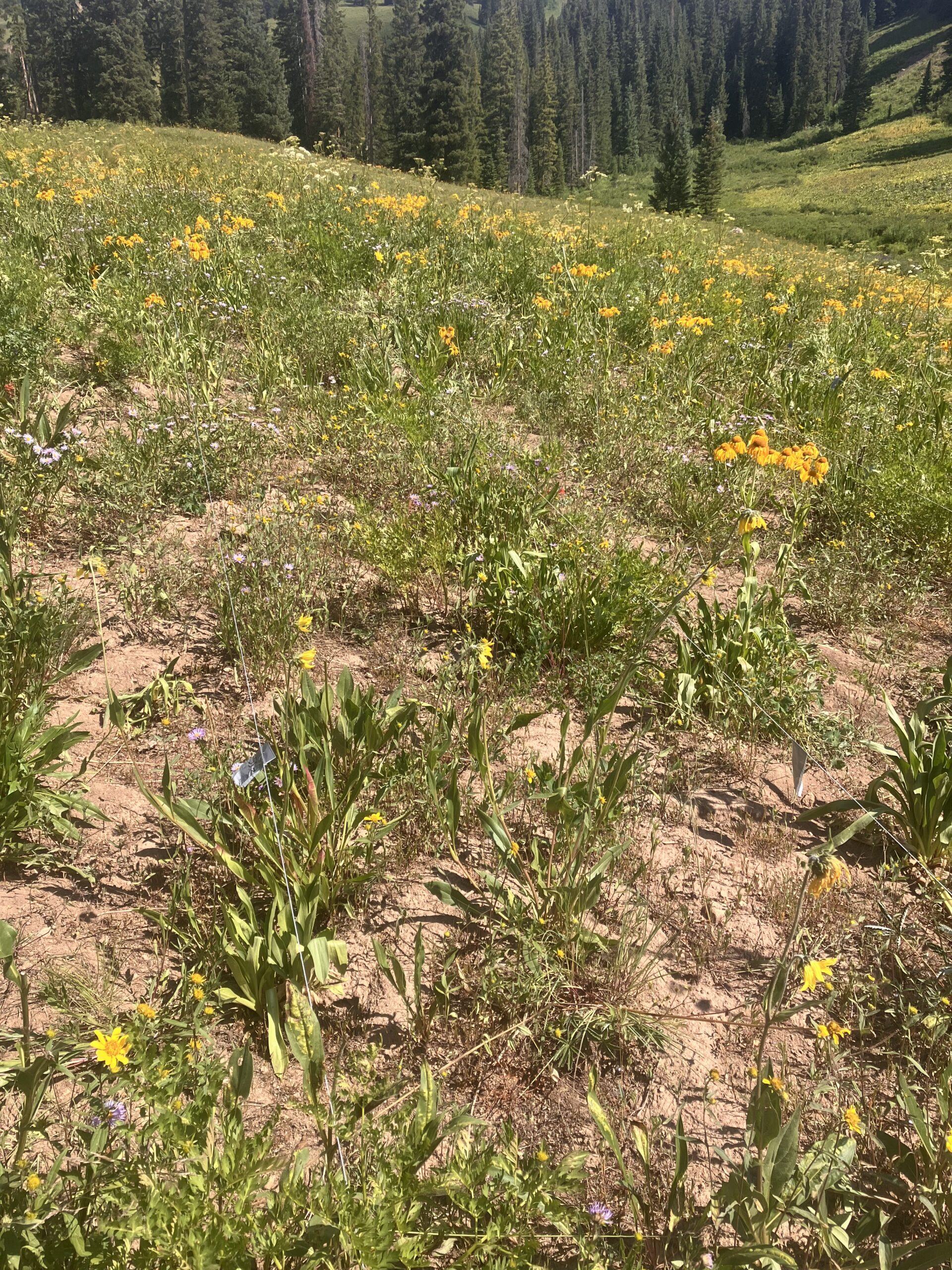
Filer’s Ridge Site
While this is surely important and definitely exciting from a research standpoint, this also keeps the work that I help out with fresh and different too! Since each site is different, even if only slightly, the flowers that are present at each site do vary, and the point at which they are producing pollen is different as well. Erigeron elatior is only present at Avery’s Picnic, while a new flower that has just recently popped up, Fireweed, or by scientific name, chamaenerion angustifolium, is mainly present at Filer’s Ridge. Furthermore, helianthella quinquenervis, while almost past at both sites, has a larger quantity still producing pollen at Avery’s Picnic, while there are barely any producing pollen at Filer’s Ridge. This is good news though, because once a flower becomes past, where it isn’t producing pollen anymore, we can scratch it off the list of pollen to collect from a site and instead focus on new flowers or just have less to do during a week.
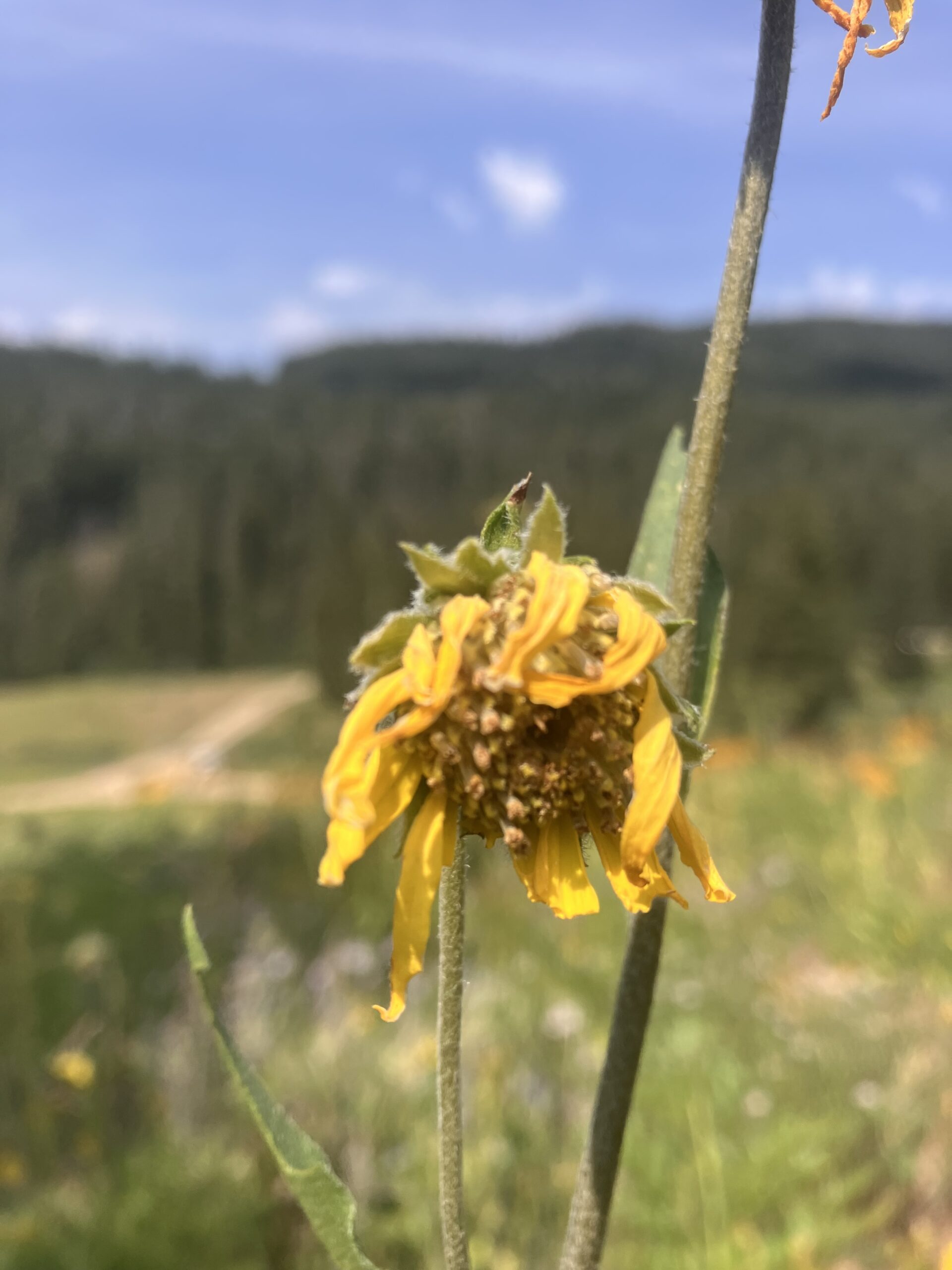
helianthella quinquenervis that is past and is not producing pollen anymore
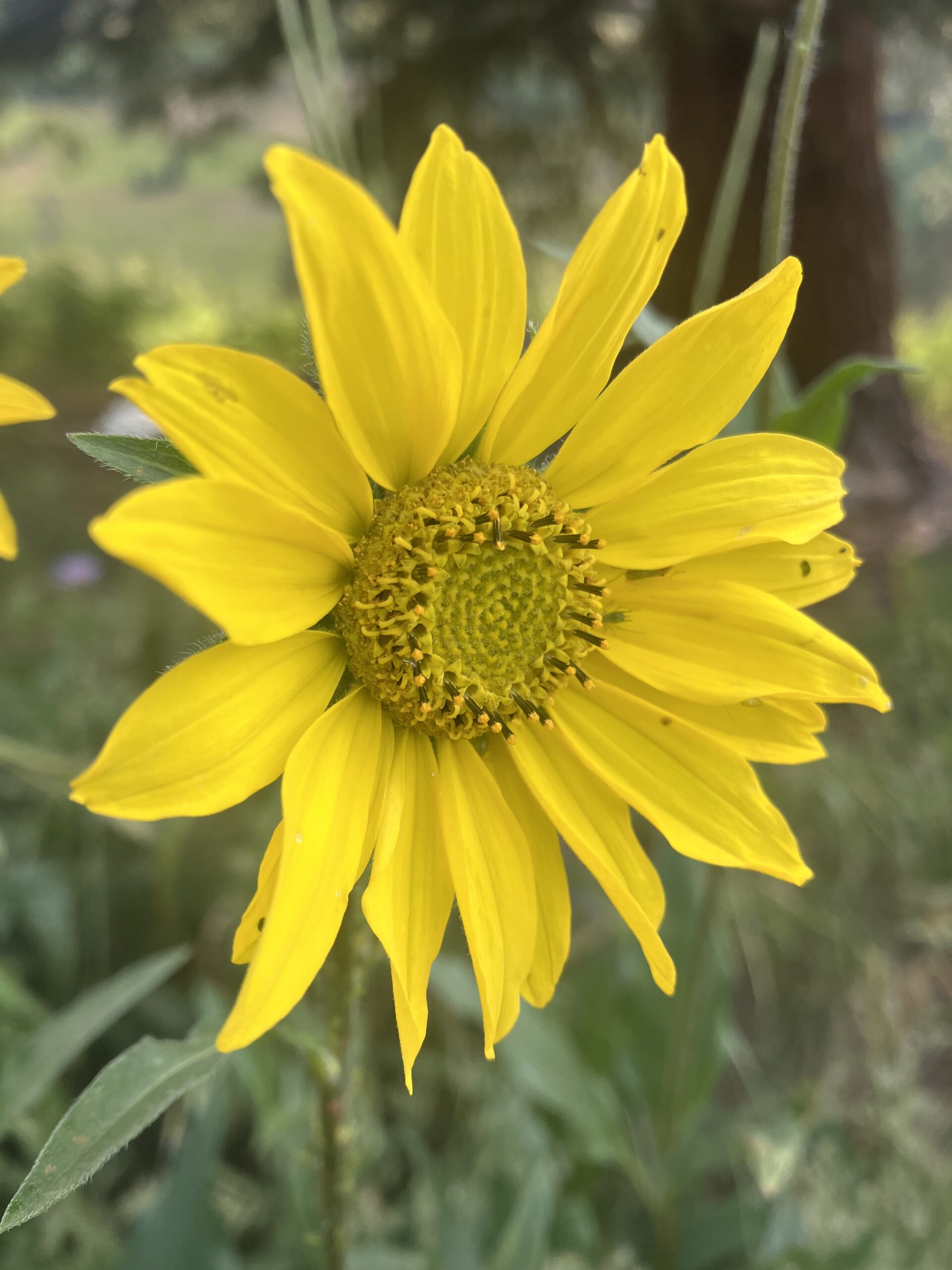
helianthella quinquenervis that is producing pollen
PJ and I have also noticed that some flowers seem to have more pollen at different sites. Delphinium barbeyi, which exists at both sites, seems to offer up more pollen at Filer’s Ridge than at Avery’s Picnic. This could simply be the time of day, where the flower is in its flowering cycle, how many pollinators have already visited the flowers, or maybe the flowers simply do better at a different elevation. It’s hard to know. There are a seemingly endless number of questions that could be asked about the timing of pollen and how it is affected by different environmental factors, and what’s crazy is that many of them have not been researched or even looked into. I hope that, potentially, as a byproduct the research that I am helping out with and the amazing paper that will come from this, that more scientists will be inspired to investigate and answer more of these questions about pollen. There is so much here to discover!
Switching topics and circling back to that new flower I briefly mentioned, chamenerion angustifolium, this flower presented some challenges in terms of collecting it and storing it when we tried briefly last week. Originally, when we started to look into collecting it, we thought it’d be no different than collecting pollen from any other flower, and with how much pollen was present on the anthers, it looked like it’d be quick to do. However, when PJ went to brush the pollen off of the anthers, like we typically do for all the other flowers, it clung to the brush and would not come off, even when she tapped the side of the brush against the lip of the tube. She then tried to use tweezers to lightly pinch around the anther and scrape the pollen off, but it, again, was determined to stick to the sides of the tweezers and not come off. So, the best work around for this was for us to just clip the whole anthers of the flowers and put the anthers, with pollen attached, into the tubes. We have done this before, but not for such big flowers with so much pollen on the anthers. We didn’t have time to look at truly separating the pollen from the anthers last week, so PJ left the tubes in the freezer over the weekend. Pollen degrades over time, therefore putting it in the freezer slows down this process. Anyways, earlier this week PJ pulled out the samples to start looking into a way to collect the pollen from the anthers and realized that the pollen had gone bad. She described it as being sludgy and having a pretty bad smell.
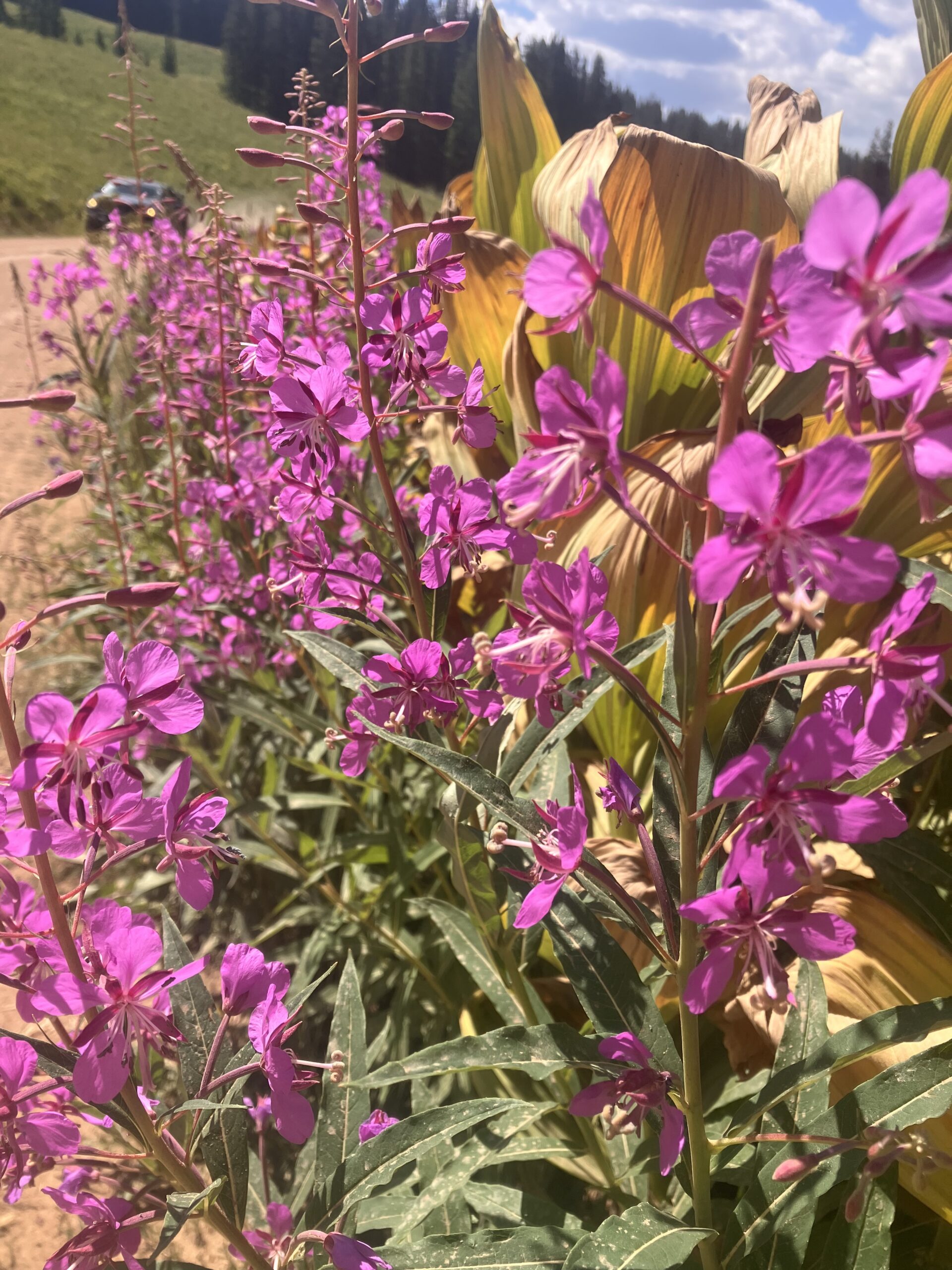
chamaenerion angustifolium
Therefore, this week, we waited until Friday to collect the pollen. If you flick the sides of the tubes when there are anthers with the pollen still attached, some of the pollen releases itself from the anthers and you can somewhat separate them. We will have to do more in the lab, but that is planned to happen next week. In the meantime, PJ hopes that since the pollen is not mixed in with the anthers, through our little separation technique, anthers which she believes holds some moisture which may have caused the pollen to go bad, it will last through the weekend and we can come up with a better plan for getting more pollen from the anthers, and to combine the tubes with the pollen together. It’ll be fun to work with something new in the upcoming week!
Outside of the internship this week, I had a ton of fun! On Sunday, I ended up going hiking with two girls from the Brosi Lab on a trail called Rustler’s Gulch. I can’t even put into words how stunning the wildflowers were through the valley and along the river. Then, on Monday, the whole team had dinner in the Town of Crested Butte at a pizza place called the Secret Stash. It was a team dinner, but also a way to celebrate one of the girl’s birthdays. The pizza was super yummy and it was fun to hang out with the entire team outside of RMBL. This weekend, I hope to make it out to the Farmer’s Market in the Town of Crested Butte again to specifically get some peaches among other things!
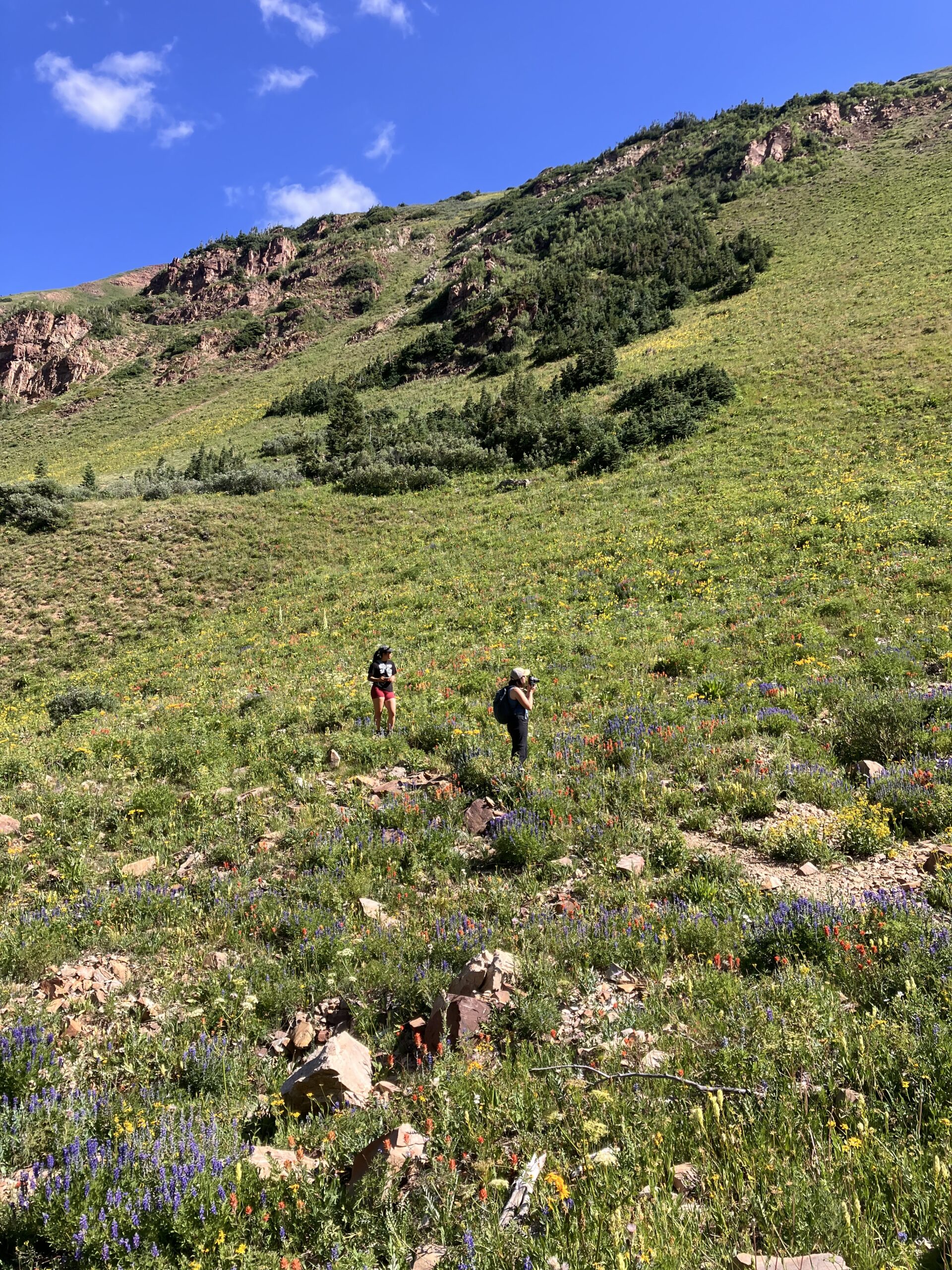
Emory and Kalia taking pictures on the Rustler’s Gulch trail
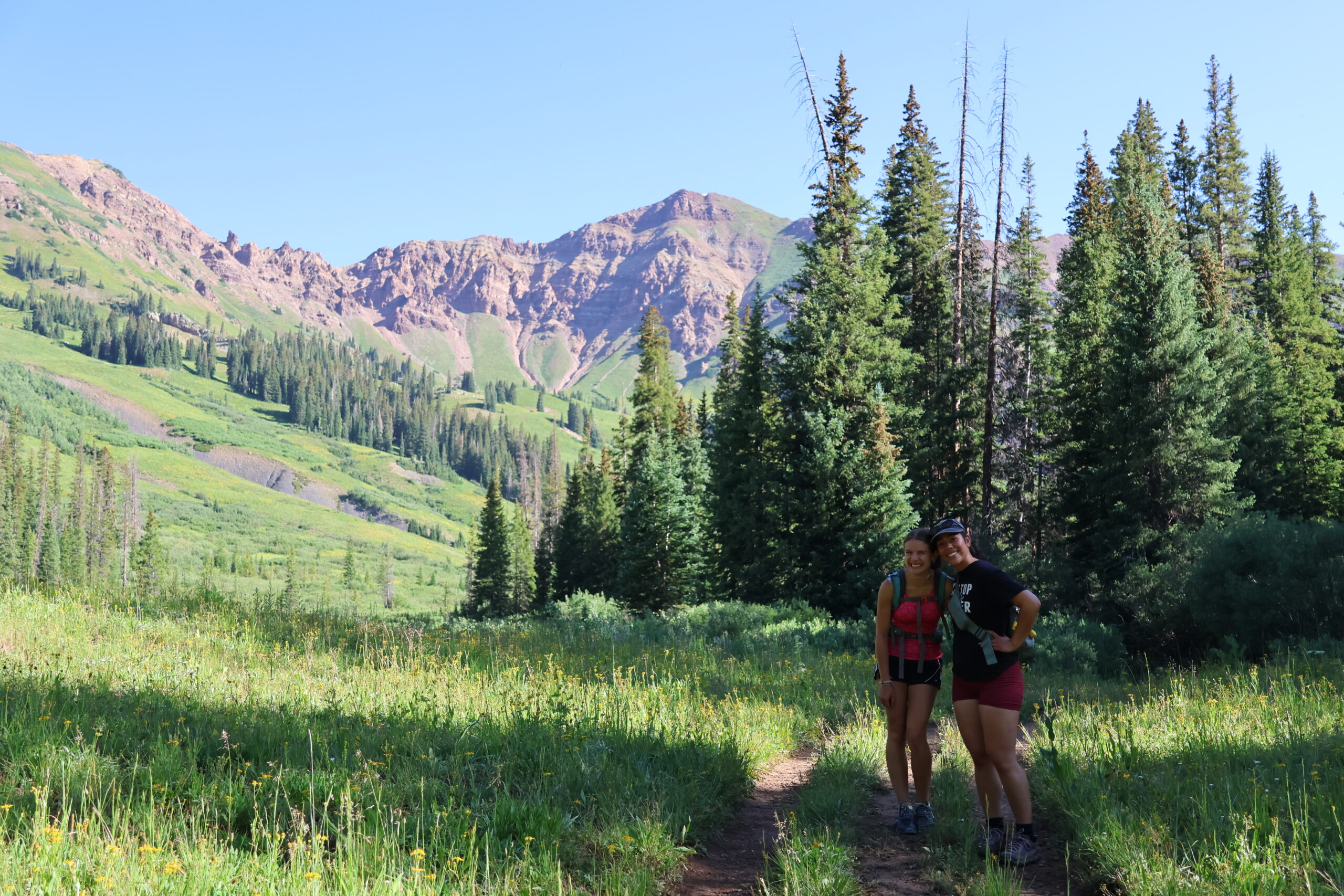
Kalia and I on Rustler’s Gulch trail
I feel like I’m truly starting to fall into the rhythm of my internship and the research I get to help out with. I can’t believe I only have a couple of weeks left, it has truly flown by!
There are no comments published yet.