
Welcome back! I’m Shiloh and this is week 4 at the Briney Lab at Scripps Research Institute in San Diego, California. Quick Refresher: the Briney Lab operates within the Immunology and Microbiology department at Scripps as a subsection of the Burton Laboratory. Its members work to analyze human immune responses to infectious diseases like HIV, Lassa, Ebola, and SARS-CoV-2 in order to identify and develop antibody proteins capable of effectively targeting these pathogens in a process known as “reverse vaccinology”. Last week we worked to produce and purify antibodies while this short week was primarily devoted to ELISA and developing new cell cultures.
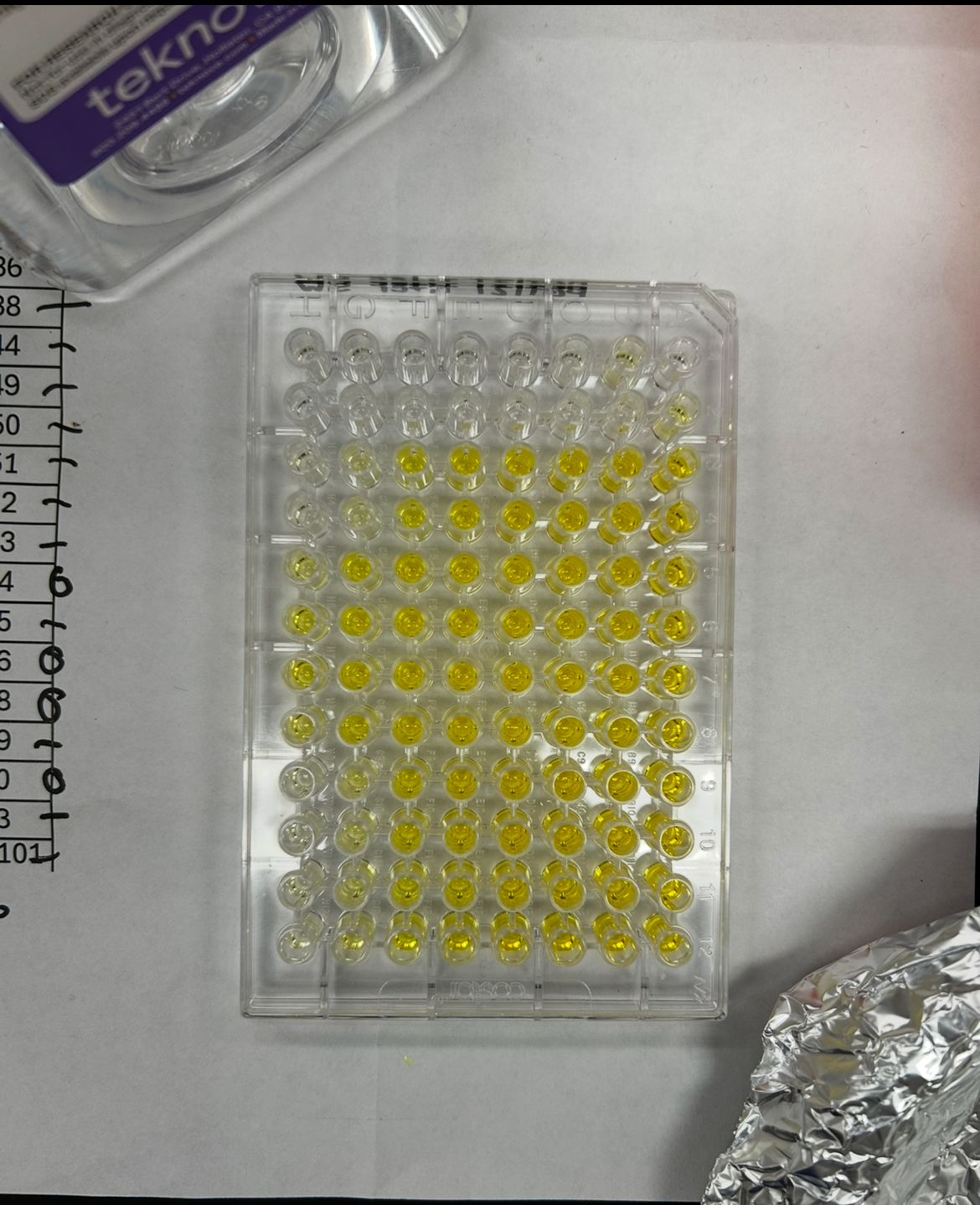
the brighter the yellow the more concentrated the antibodies…
ELISA, or enzyme-linked immunosorbent assay, is a laboratory technique used to detect and measure the concentrations of substances like proteins, pathogens, and in our case antibodies. It allows us to see how effective our transfected cells have been in creating our desired products (i.e. PGT 121 for the purposes of my work). ELISA works by attaching a primary to the base of a well plate, the antibody will stick to the primary and the secondary will in turn attach to the antibody. All other materials in the well will be washed away wit PBS .05% Tween. Conjugated with the secondary is an enzyme that glows when activated. The intensity of the light can then be measured using a spectrometer to determine concentration of antibody in a solution. We used samples taken from day 0, 1, 2 and 5 of our antibody supernatant and a standard control when setting up our ELISAs, which we ran as a dilution gradient. This means the sample from each day is diluted by a factor of 5 seven times and we ran two sets of each sample. One pair of our 96 well plate was occupied by a set of Yenni’s samples for a total of twelve columns. My primary was an anti-human fab 2′ derived from a goat and my secondary was an anti-human fc conjugated with horseradish peroxidase. Basically the plates get rinsed and have the different components added to them a million times and then the HRP substrate (peroxidase) is added, which causes a light blue color as it reacts. The reaction is time-sensitive, it can only sit for 10 minutes after which 2M sulfuric acid is added to end it; it’s super cool to watch since the ELISA will turn from blue to yellow almost immediately, a super striking change. My PGT121 antibodies were actually super concentrated indicating successful expression and secretion by the transfected cells so yay!

The adherent cells don’t look much like the suspended ones.
We also began to develop a new set of cell cultures, these ones are adhesive rather than suspended and have subsequently been christened A$AP Rocky (Azari) and Biggie Smalls (myself). While our last pair of cultures were both Expi293, we’re actually developing two different types of cells this time. Mine are cancerous human liver cells (HEPG2) while Azari’s come from a cancerous Vero monkey. Wicked. Why are we growing new cells? What’s the difference anyways? I’ve got answers for you! Suspension cells like Expi293 are used for protein expression whereas adherent cells are used for different assays such as neutralization. HEPG2 cells can be infected with malaria since they are from the liver and Vero cells are used for a lot of pathogens so Azari and I kind of accidentally flipped our subjects when it comes to these cultures. In short, suspended cells are used to produce antibodies and adherent cells are used to culture pathogens/infectious parasites for neutralization testing. Because these adherent cells are cancerous they expand infinitely so long as they’re provided with the nutrients and space needed to survive. Normal cells don’t do this, they slowly begin to degrade and expire over time. Because adherent cells need a surface to grow upon, as their name suggests, the splitting and counting process is a little more complex. Counting is called confluency and is basically done off of vibes; if I’m being honest you kind of just eyeball the cells and guess how crowded they are: packed like sardines is 100% and a house with no one home is 0%. You split at 80% and have to use a specific media called DMEM and a digestive enzyme called Tripsin to temporarily suspend the cells for dilution and transference.

the dark room is such a vibe
Nate B. also took us to look at some plasmodium falciparum sporozoites (the parasites responsible for Malaria) under a microscope. This type of microscopy is known as confocal fluorescent microscopy and it allows us to observe the movement of live sporozoites. The parasites are stained with GFP (green fluorescent protein) and then excited under blue laser light. They like to spin around in little circles and dance and I love them for that. The sporozoites were not being very cooperative that day but the imaging of them and the dark room as a whole was pretty cool. Nate B. likes to play music as he works so the atmosphere was oddly chill despite the struggle with developing good pictures that day. Throughout the week we also helped out with a few more DNA preps for Sean and Liendo, learned about SDM (site-directed mutagenesis), participated in Lab cleaning day, and generally got to know other members of the lab more than we had before. Everyone is so cool, welcoming, and kind!
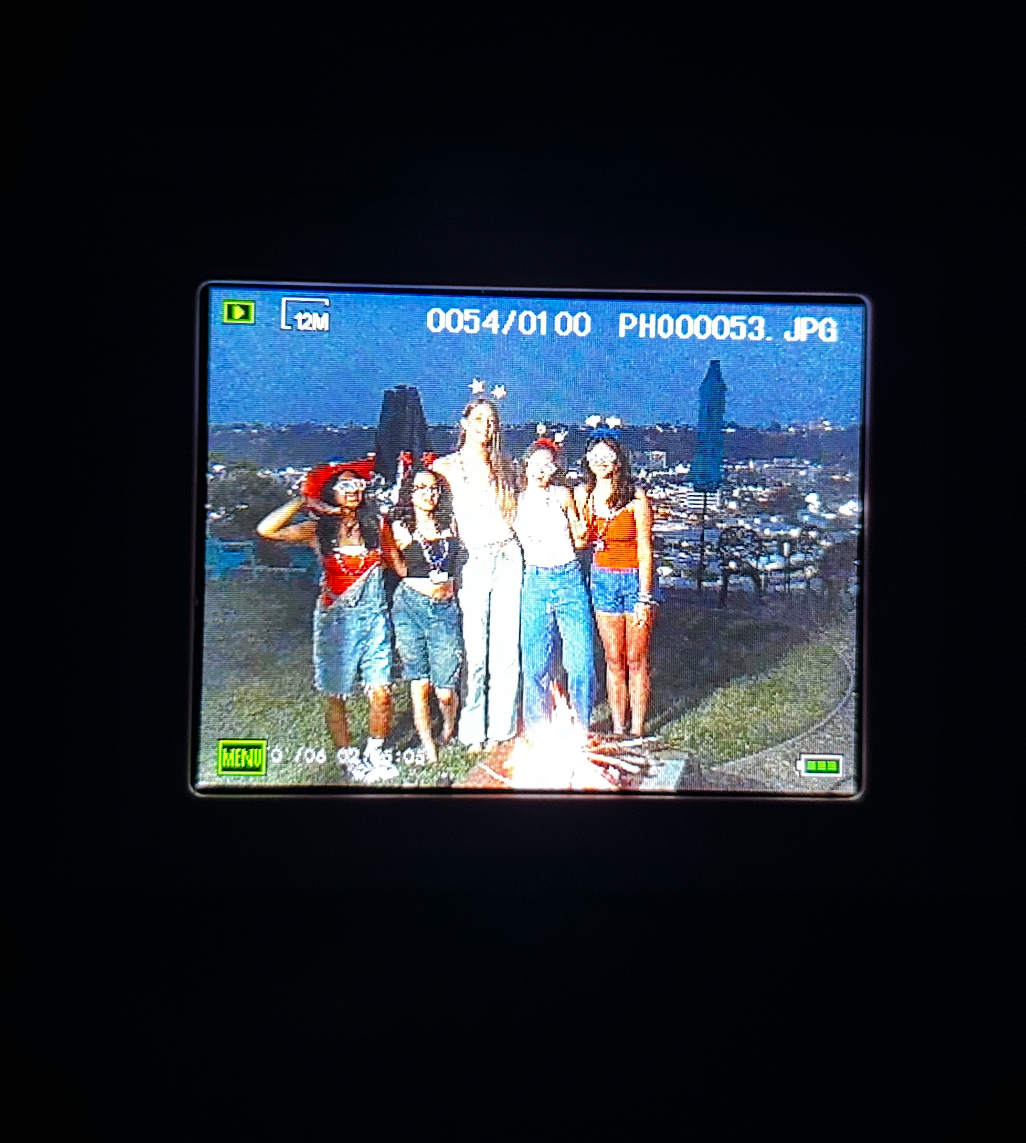
blurry photos on digital cameras >> iPhone pics
This week was super fun outside the lab as well! Thursday after work Nate B. took Azari and I surfing with his girlfriend Marie and Yenni. (Thanks guys!!) They are good at surfing; we are definitely not. Getting up on your feet is a lot harder than it looks, I tripped over the surf leash at least eight different times and Azari ate it so hard she left with a cool new face scar (just kidding it’s only a little scratch). It was still so much fun though: we plan to go more from now on. We had Friday off for the fourth of July and you could see the fireworks they set off over the bay from our backyard. Some of the girls tested their hands at grilling and we roasted s’mores over the firepit after spending a long day at the beach boogie boarding and making friendship bracelets. I truly think life is ten times more fun with friends so I’m so, so glad I get to share this experience with these four amazing girls! On Saturday morning, Reign headed out with her uncle that’s visiting and we went to the mall where Lana and Maiya found sick deals on cute matching shirts and Azari and I continued our quest for finding charms that look like viruses. We didn’t succeed but we did find a pair of little evil eye charms that we thought resembled cells in tripan blue so of course we had to get them. Week four has been great but it’s time to get ready for week five; I’ll catch you again then! Until then I wish you a good morning, good afternoon, and goodnight.
There are no comments published yet.