02 Aug Akira Smith, UCSB Bob Miller Lab, Week 5
Hey everyone!
This week absolutely flew by, but it was packed with research, boating, and plenty of sunshine! Kaitlyn and I continued working on our side project while also getting a glimpse into several other projects happening throughout the lab.
One of my favorite parts of this week was seeing how our project connected with Billy’s research. Watching the two come together has been really exciting. This week we collected samples from two different sites, Naples Reef and Carpinteria. Once again, we had to break open the rocks and collect usable samples, making sure to remove any shells or living organisms. It was definitely a challenge because many of the rocks were full of tiny creatures, making it difficult to isolate the material we needed.
Our results have been pretty interesting so far. We found that burrowing clams seem to prefer rocks containing higher amounts of quartz. This was surprising because clams are generally thought to choose their habitat based on the texture and grain size of the rock rather than its mineral composition. Now we’re trying to determine whether the higher quartz content is simply a characteristic of the sites where we collected the rocks or if it’s part of a broader pattern.
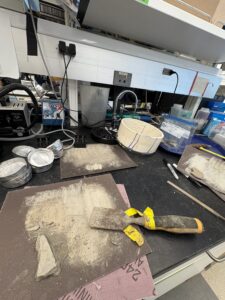
Our flattening station
There are many different species of burrowing clams, and each has its own way of excavating rock. In general, they prefer softer, more homogeneous rocks such as sandstone, mudstone, and shale, while avoiding harder igneous and metamorphic rocks like granite because of their tightly packed grain structure. Some burrowing clams excavate mechanically by twisting and grinding their shells against the rock, while others rely on chemical dissolution, releasing acidic secretions that soften the rock before grinding into it. Our research focuses on Parapholas californica, a species that commonly burrows into shale using this mechanical process.
Throughout the week, Kaitlyn and I prepared many more samples, spending hours grinding and shaving down rocks. We also continued sorting organisms found within the samples, and there were plenty of unexpected discoveries hidden inside. In addition, we helped Frankie, another mentor in the lab, enter large amounts of data. It was definitely one of the more repetitive tasks, but it reminded me that scientific research isn’t always exciting fieldwork, there’s a lot of careful data collection and organization that makes the discoveries possible.

A little crab we found

Sea critters from inside the rocks
One of the highlights of the week was getting the opportunity to head out on the research boat. I met Billy and the rest of the team at 6:20 in the morning (a little earlier than I would have liked!), and we made our way to Carpinteria. This trip was for a different project, the annual survey for the Santa Barbara Coastal Long-Term Ecological Research (LTER) program. The LTER monitors kelp forest ecosystems by surveying around 250 different species and tracking changes in their abundance, size, and biomass over time.
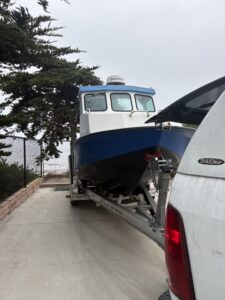
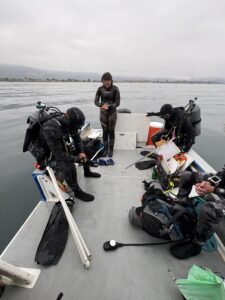

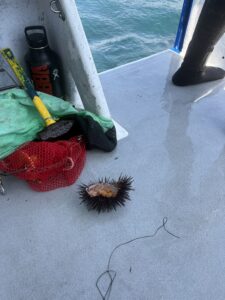
Watching the researchers in action was fascinating. They were essentially diving with clipboards, carefully recording observations underwater. Unfortunately, I don’t have my scuba certification yet (hopefully soon!), so I stayed on the boat, labeling sample bags whenever rocks were brought back up and enjoying the beautiful weather from the deck.
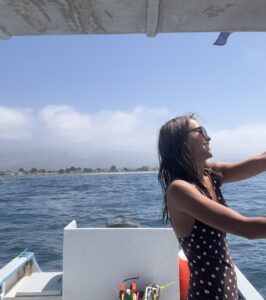
Even from the boat, there were plenty of unforgettable moments. I watched schools of fish leap out of the water, spotted several harbor seals, and even got to try fresh uni for the first time. Billy brought up a live sea urchin, opened it, and let me taste it. I was a little nervous at first, but it was surprisingly good, salty with just a hint of sweetness.
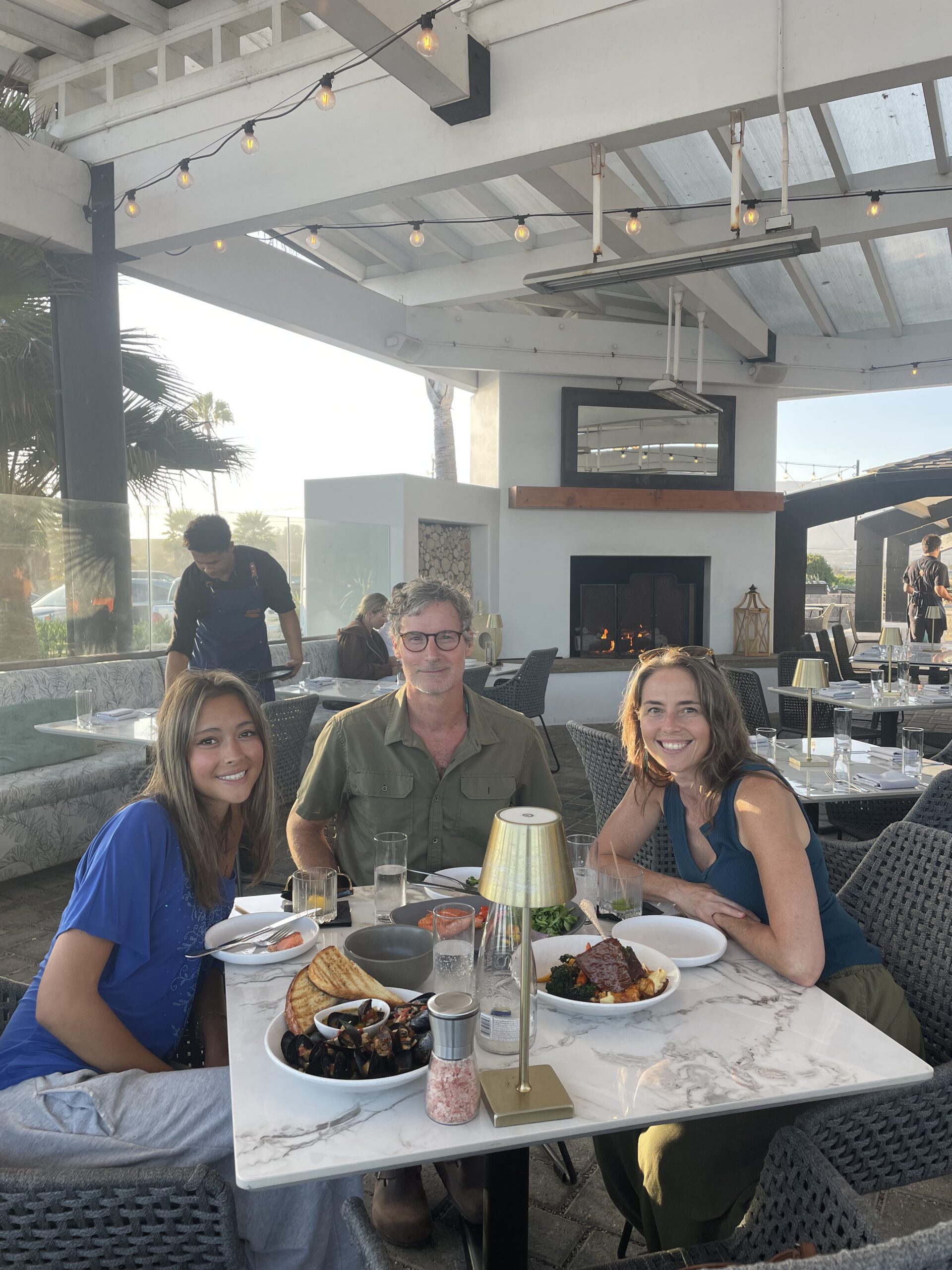
Outside of the lab, I also learned how to boogie board, spent time catching up with my aunt and uncle, and tried all kinds of new food around Santa Barbara. It was another busy week filled with learning, new experiences, and a lot of fun. I’m excited to see what next week brings!
No Comments