05 Jul Gunnar Robinson, The Colorado School of Mines, Petroleum Engineering, Week 3
Hello everyone, this is Gunnar Robinson. I am excited to report that my third week at the Colorado School of Mines was another fantastic experience. While this week was a little calmer than the previous two, it still provided many valuable opportunities to learn new technologies, deepen my understanding of petroleum engineering, and spend time with some incredible mentors and friends. From learning industry-standard fracture modeling software with Dr. Ashtiwi Bahri to continuing laboratory work with Kenneth Bensching, this week helped me further develop both my technical skills and my understanding of the petroleum industry. I am excited to share what I learned and accomplished throughout the week.

With Dr. Ash, I was introduced to a petroleum engineering fracture modeling software called Gohfer, which is developed by Halliburton and used throughout the industry to model and optimize hydraulic fracturing treatments. One of the most exciting parts of the week was getting the opportunity to work with software that is used in both industry and research settings. Through Gohfer, I completed a project where I modeled different hydraulic fracturing scenarios by changing variables such as proppant type, fluid type, pumping rates, and treatment designs. By adjusting these parameters, I was able to observe how they affected fracture growth, hydrocarbon production, and overall economic performance.
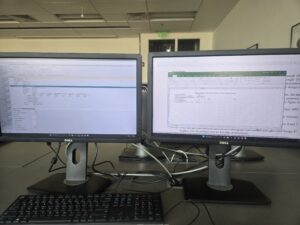
This project gave me a much deeper understanding of how petroleum engineers use computer modeling to make informed decisions before conducting expensive field operations. It was fascinating to see how changing a single variable could significantly impact both production and profitability. Being able to use the same type of software utilized by professional engineers and researchers was an incredible experience, and it gave me a greater appreciation for the role that technology plays in modern petroleum engineering.
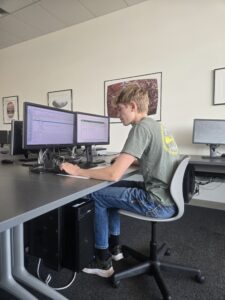
In addition to learning Gohfer, Ash spent time teaching me how petroleum engineering students, researchers, and professors use Microsoft Excel and other Microsoft applications to organize, analyze, and interpret data. Before this week, I understood the basics of Excel, but I had never fully appreciated how powerful the software can be in engineering and research environments. Ash showed me many of the tools and functions that engineers use to efficiently manage large amounts of data and communicate results. This was an extremely valuable lesson because data analysis and organization play an important role in nearly every aspect of engineering.

I also continued helping Ash clean and organize equipment following another fracture flow experiment. While cleanup may not be the most glamorous part of research, it gave me a better understanding of the work required to keep laboratory experiments running efficiently and safely. I am incredibly grateful for Ash’s willingness to invest his time in teaching me both technical concepts and practical skills that will benefit me in the future.
With Ken, I helped complete the cleanup process from our previous core flooding experiment and began preparing equipment for a new test. We also spent time working with porosity and permeability testing equipment in the undergraduate laboratory. While conducting these experiments, we encountered some unexpected inconsistencies in our results. At the moment, we are working to determine whether the discrepancies are caused by machine error, human error, or another factor entirely. Because of this, we have been carefully reviewing procedures and troubleshooting every possible source of error in an effort to improve the accuracy of our measurements.
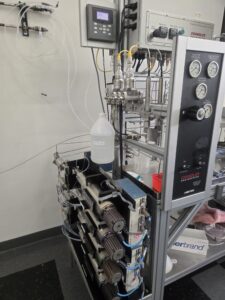
Although the results were not exactly what we expected, it was valuable to see how engineers and researchers approach problems when experiments do not go according to plan. One of the most important lessons I have learned during this internship is that research often involves troubleshooting, patience, and persistence. I am very thankful for Ken’s guidance throughout these projects and for the many opportunities he has given me to participate in hands-on laboratory work.
This week I also had the opportunity to meet with my mentor, Dr. Jennifer Miskimins, for another check-in. Our conversation went extremely well and further strengthened my appreciation for both the Colorado School of Mines and the Petroleum Engineering Department. Hearing about the department’s vision, opportunities, and commitment to student success has only increased my excitement about the possibility of pursuing petroleum engineering in the future. I am very grateful for Dr. Miskimins’ mentorship and support throughout this experience.
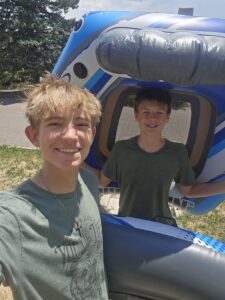
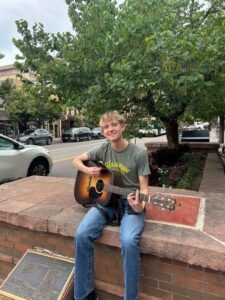
Outside of the internship, I had a great week spending time with some of my best friends here in Golden. We went tubing in the river, visited a trampoline park, and enjoyed exploring the area together. I also had the opportunity to play guitar and sing on Main Street, which was a lot of fun and a great way to spend an evening. These experiences have made my time in Golden even more memorable, and I am incredibly thankful to be sharing this adventure with such great friends.
Overall, week three was another amazing experience. While it may have been a little quieter than previous weeks, I learned a tremendous amount about petroleum engineering software, data analysis, laboratory procedures, and research methods. I am excited for the challenges and opportunities that lie ahead, especially as I begin a two-week petroleum engineering course known as Petroleum Engineering Super School. I am looking forward to continuing to learn, grow, and make the most of this incredible opportunity.
Thank you again to everyone who has helped make this experience possible.
Do Things Worth Doing!
~ Gunnar Robinson
Marianne Robinson
Posted at 08:22h, 06 JulyThank you for sharing. It is amazing of how much knowledge you have acquired and still have time to pl