19 Jul Belle McTigue, TSRI Briney Lab, Week 4
Hi everyone, welcome back to the blog! This week in the lab, we were working on two main projects for Nathan and Terrance; we were mainly focusing on protein harvesting, which is a big step and enables us to isolate the antibodies, which opens doors to research and testing to see if the antibodies work!
Monday was somewhat of a slow day in the lab. We first attended the lab meeting, where there were two talks: one about the flu and the process of engineering the flu, and the other about AlphaFold and data research. I have really enjoyed going to these talks because it adds exposure to all the lab words and protocols. Am I lost half the time? Yes. Do I learn something new and have a somewhat better grasp of what is going on? Yes. After the talks, we shadowed Dani, who was extracting protein from cells. Dani used a microfluidizer, which is a machine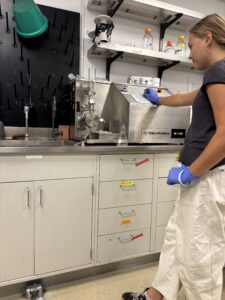 where you put your cells in, and through tight tubes and all the pressure it creates, it bursts open the cells, resulting in proteins. After you put it in the machine, you centrifuge it to separate your proteins from the rest of the unwanted cell debris. Although we weren’t doing much, shadowing Dani was really fun, and my favorite part was shadowing someone with great enthusiasm about the science. After using fancy machinery, we continued to shadow Dani as she “split cells,” a process I still don’t fully understand. What I have come to learn, and have been told many times, is that we basically just move liquid around — we don’t always know what it does, but it is what we do. Many of our mentors have said this has been good for them too, since reviewing the processes means they have to understand what’s actually happening in order to teach us.
The majority of the rest of the week was dedicated to intense World Cup watching and continuing our work on Nathan’s project. We started with harvesting.
On Tuesday we got to harvest our own proteins, the ones we’d 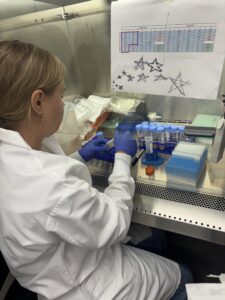 been working on last week with Nathan. All 38 samples needed to be harvested. This process had to be done in a subculture room under a hood — a very sterile room where you work with live cells. This was our first opportunity to work under the hoods alone. There’s a methodical way to move in and out of the hood: spraying everything down with ethanol and only opening your samples inside the sterile environment. We each got 12 antibodies and started by switching tubes, since there was bacterial growth in the original ones. Then we centrifuged them, which gives you a cell pellet, filtered the supernatant, and added protein A. Harvesting is the process of spinning down cells and keeping the liquid (supernatant) with your protein in it.
For optimal antibody recovery, we let the proteins and protein A (agarose beads) sit in the cold room for the night. In the afternoon, we continued to work under Morgan, whose main project is working with mice. We watched as she extracted B cells from a mouse spleen. Through filtering and adding specific reagents and an antibody cocktail, the B cells were isolated. The last step was to run the cells through a really strong magnet that isolates the cells completely.
Wednesday was a chill vibes day all around. We began by harvesting the proteins we transfected with Raiza on Friday. You begin by centrifuging the mixture so the cell debris forms a pellet at the bottom, then filter the rest 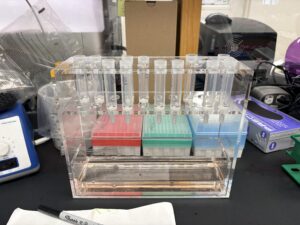 out of the supernatant. Then we add beads to each one and add sodium azide, which kills everything remaining. Since proteins technically aren’t alive, they’re left unharmed, but all the remaining bacteria and cell debris will be killed. We went to the lab meeting and watched Nathan’s presentation — we were featured, it was awesome, and all our hard work was recognized. Then we watched the World Cup game for England. After the filtering was done, we set the tubes on the rollers for 2 days. After waiting two days for our protein to sit with the beads, we were able to continue the harvest. We divided the antibodies and filtered them in columns. This process is very slow, since there’s no outward force and the antibodies simply have to flow through. The supernatant flows through while the beads — stuck to the antibodies — get caught in the filter. We did rounds of PBS buffer to wash the beads and purify them. Then we added elution buffer, which breaks the bond between the beads and the proteins. We filtered this into a separate tube that was set up with a base so the antibodies would be unharmed and stable. We put those in the cold room for the night.
Friday was by far my favorite day in the lab. We got to experience independence and a full day of wet lab work:  gloves on from 10:30 till 3:30. We continued to focus on Terrance’s and Nathan’s projects. We started with Terrance, working in the cold room — if you didn’t know, it’s cold, like 4 degrees Celsius. We were in there for 2 hours doing the same thing we’d done the day before with Nathan, except Terrance’s samples were on a bigger scale: each one was a liter. We were working with R4, RR, and NipaH. All of these strains are unstable, so working in the cold room and keeping them at a constant temperature helps stabilize them and decrease the chance of failure. After two hours, Liliana and I were pulled early from the cold room to help Nathan finish the harvest with the 38 antibodies. The last step was washes. As I said earlier, we’d left them in tubes with filters. First we spun down the remaining substance, followed by three washes of PBS (a simple buffer) with rounds of centrifugation between each wash.
 After all the washes, we extracted the antibodies stuck in the filter into 1.5 mL tubes. Then, the moment of truth: to see if our work from the past two weeks was a success, we tested the concentration of the antibodies. To be completely honest, I still don’t know if we succeeded, but Nathan seemed content with our results.
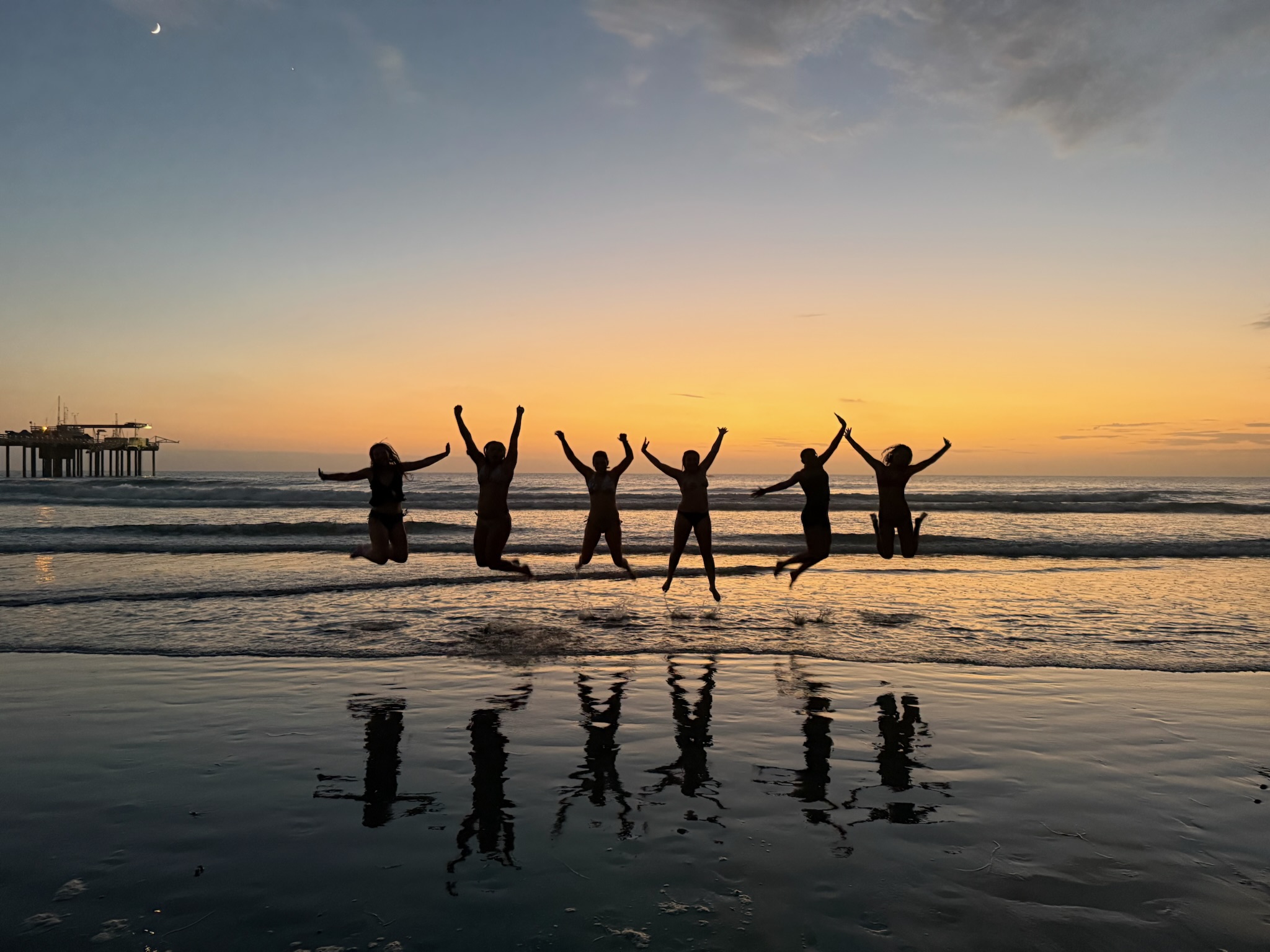
We got home after a long week and had an amazing celebratory night. We had salmon bowls, then headed to Scripps Pier and jumped in. After, we went to the dessert shop Jennie has been telling us about our entire internship. We said goodbye to Stella and Kaila while the rest of our house prepared for our last week in the lab. I am excited to see what’s to come!
Beverley McTigue
Posted at 17:28h, 19 JulyBelle… continue to be amazed at your journey into science through the Pinhead program. This is an experience you will always remember and talk about. Enjoy your final week.
Bevy😘