
05 Jul Belle McTigue, TSRI Briney Lab, Week 2
Hello everyone! Week 2 at Briney Lab went by quickly and was full of hands- on wet labs and lots of learning!
We began the week by being given a sequence of DNA, but more specifically a gene of interest from HIV-1, and our job was to confirm if the DNA was real or not. To do that, we put it into a government medical database that analyzes the sequence and matches it with strands of viruses. From there, we analyzed which strand had the highest likelihood of having the same genome sequence. I lucked out and had a 100% match with my gene of interest matching HIV-1 isolate V703_2117_110_REN_1_19 from South Africa. This process confirms if the gene belongs to the specific target (the disease planned to be studied) or, in nice words, a flop.
This is more the computational side of the lab. Science labs are shifting more towards using AI and technology to analyze and help them study proteins and DNA.
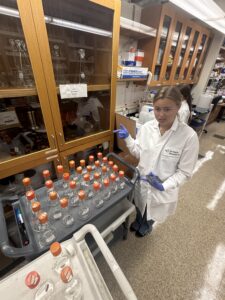
Tuesday we got to get back into the wet labs! Yes, this is definitely my favorite part because you are working hands-on and interacting with the recombinant antibody pipeline – the processes of producing antibodies using genetic engineering. A key step of the pipeline is the cells you start with and making sure they are healthy. One way to do this is to feed the cells with media, which is literal cell food. So we suited up with our swaggy lab coats and sterilized gloves and made 10 liters of LB media. Do you know how much 10 liters is? Because it is the perfect size to feel like a witch brewing a concoction, and thats exactly what we did. The LB media is essentially gatorade; it consists of H20, NaCl, tryptone, and yeast extract. After brewing our cell Gatorade, we put it into an autoclave to sterilize it through pressure and water vapor, this is necessary as you don’t want any confounding variables during the pipeline as the fail rate is already high (we learned this a lot this week). Later in the afternoon, Jonathan talked us through the Gibson assembly that we would perform on strands of Hantavirus and HIV. Gibson assembly is basically a way to glue your gene of interest (your disease) to a plasmid (the backbone) to create the genetically engineered strand of DNA that contains the disease of focus. This process is tedious because it involves several precise steps. We first added buffers to protect the DNA and keep it in solution, then mixed in the genes of interest. Specific enzymes are then activated to trim and join the DNA pieces together. Next came a heat shock (cold–hot–cold) that temporarily made the bacterial cells more permea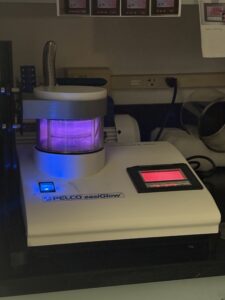 ble, enabling the DNA insert to fully connect to the backbone. After adding growth media, we let the cells recover on a shaker before plating them on an agar plate. The plates were then incubated, and if everything worked as planned, the transformed cells would grow into visible colonies. Spoiler alert: it didn’t!
Wednesday, to simply put it, Liliana, Ellie, and I felt like someone going to jail, and we were guilty of all counts. We also finally accepted the concept that 90% of the time you will fail in the lab, so expect the worst, but if it does work out, then celebrate. First, we checked our agar plates, and there was absolutely no sign of a bacterial colony nothing, nada, zip! This means the Gibson assembly failed or the DNA died. In our case, the concentration of the inserts was so low it failed to grow.
Again, everyone in the lab tells us that you should never blame yourself; it probably wasn’t your fault, so blame the system. So when we opened the incubator to check our 10 liters of media, we saw the liquid was cloudy, indicating that bacteria was growing in the media. We learned we can grow bacteria just in the wrong place. After inspection, we learned the Autoclave (pressure oven for cell food) didn’t reach a high enough temperature to fully sterilize the media. Shame. We remade 7 of the 10 liters of media… and broke one beaker.
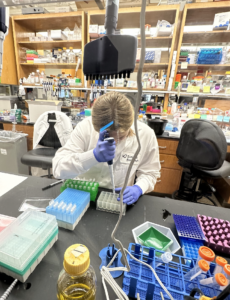 Liliana and I had better hopes for Thursday. Our new round of media was a success! YAY! Then we went to work on a different part of the pipeline, the purification processes. This is the final step, where you separate the antibody from everything else in the cell culture – leftover cell debris, proteins, and growth medium — so you’re left with just the pure antibody, so you can see if you created a viable antibody to use in a vaccine. This process contains so much pipetting; I think I might have arthritis and a hunch back. We pipetted 250 times for America’s 250th birthday! This is due to the amount of buffer and wash you add to the antibody to get the best result. In total, we did 3 washes on 48 different antibodies (24 each) and centrifuged 5 times. After waiting and the 5-hour process of purification, only one of the 48 antibodies looked good, the concentration… a solid .027 ug/mL. After speaking with Jonathan, he told us if you can get one solid antibody out of 90, that is a success. So overall, this week was full of the lesson that a major part of lab work is learning how to fail but being curious enough to ask why and try again until you get it right.

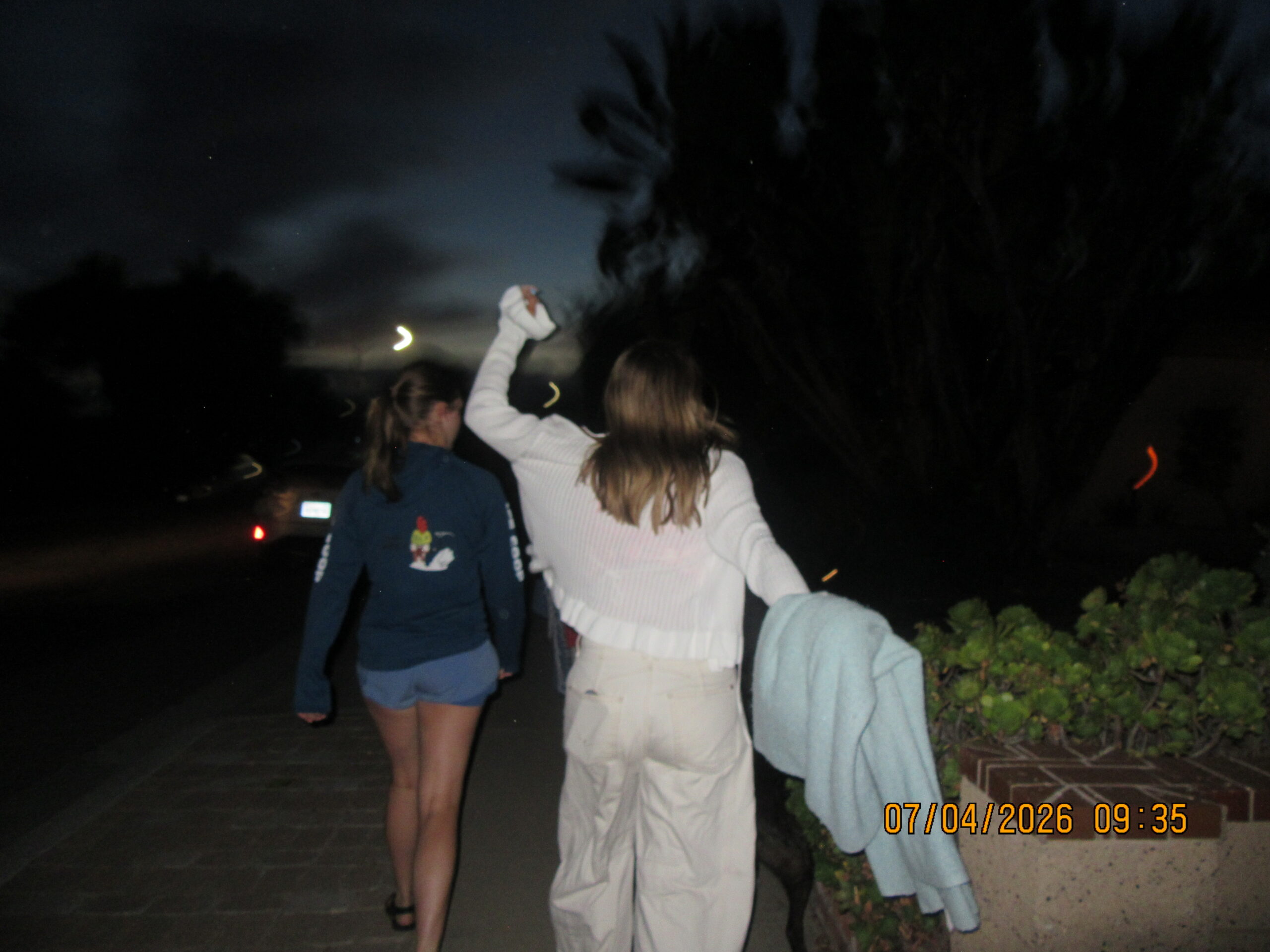
San Diego has been a treat; the girls are awesome, and the side quests are happening. Outside of the lab, we have been going to beaches, riding roller coasters, celebrating the 4th, doing arts and crafts, and having very intellectual conversations!
Welp, that’s my story, thanks for reading! See ya next week!
Beverley McTigue
Posted at 16:21h, 05 JulyWhat you have learned and experiencing in the two weeks in the lab is incredible.
We missed you in TRide for the 4th but to be honest it was so smoky that it was difficult to be outside. Being at the beach was more enjoyable and healthy for you.
Look forward to notes from week 3. 😘