19 Jul Akira Smith, UCSB Bob Miller Lab, Week 3
Hi everyone!
This week was filled with sunny days, beach trips, and, surprisingly, a lot of engineering. I spent most of my time working with Billy and Kaitlyn (my fellow intern) on building and calibrating a system that will be used to measure the filtration rates of the burrowing clams.
Billy’s research focuses on measuring how much water these clams filter through their siphons. To do this, he uses a calibration system equipped with tiny oxygen sensitive nanoprobe sensors that measure the oxygen levels in the water entering and leaving the clams through their inhalant and exhalant siphons. Even though this system is already implemented out in the field, the goal now is to get this system ready so we can use it on the clams we keep in tanks down near Campus Point. As it turns out, that process was much more complicated than I expected.
Our first challenge was making sure all four nanoprobe sensors were calibrated to produce the exact same readings. We assembled the entire setup, which included the oxygen probes, a thermometer, a circulation pump, and what felt like an endless tangle of wires. The photo below shows what our calibration system looked like.
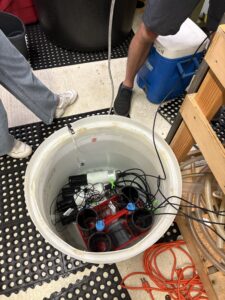
Just as we were getting ready to connect everything to the computer, it crashed. We spent quite a while troubleshooting, and eventually we took the whole system apart and packed it up to try again later.
While we waited to get the equipment working, I spent a lot of time learning R, the coding language our lab uses to organize, analyze, and graph research data. At first, it felt a little overwhelming, but I’m slowly starting to understand it. Coding can definitely be tedious, but there’s something oddly satisfying about finally getting everything to work. (most of the time.) I also continued preparing rock samples by cutting and grinding them into smaller, flatter pieces for our rock density experiments.
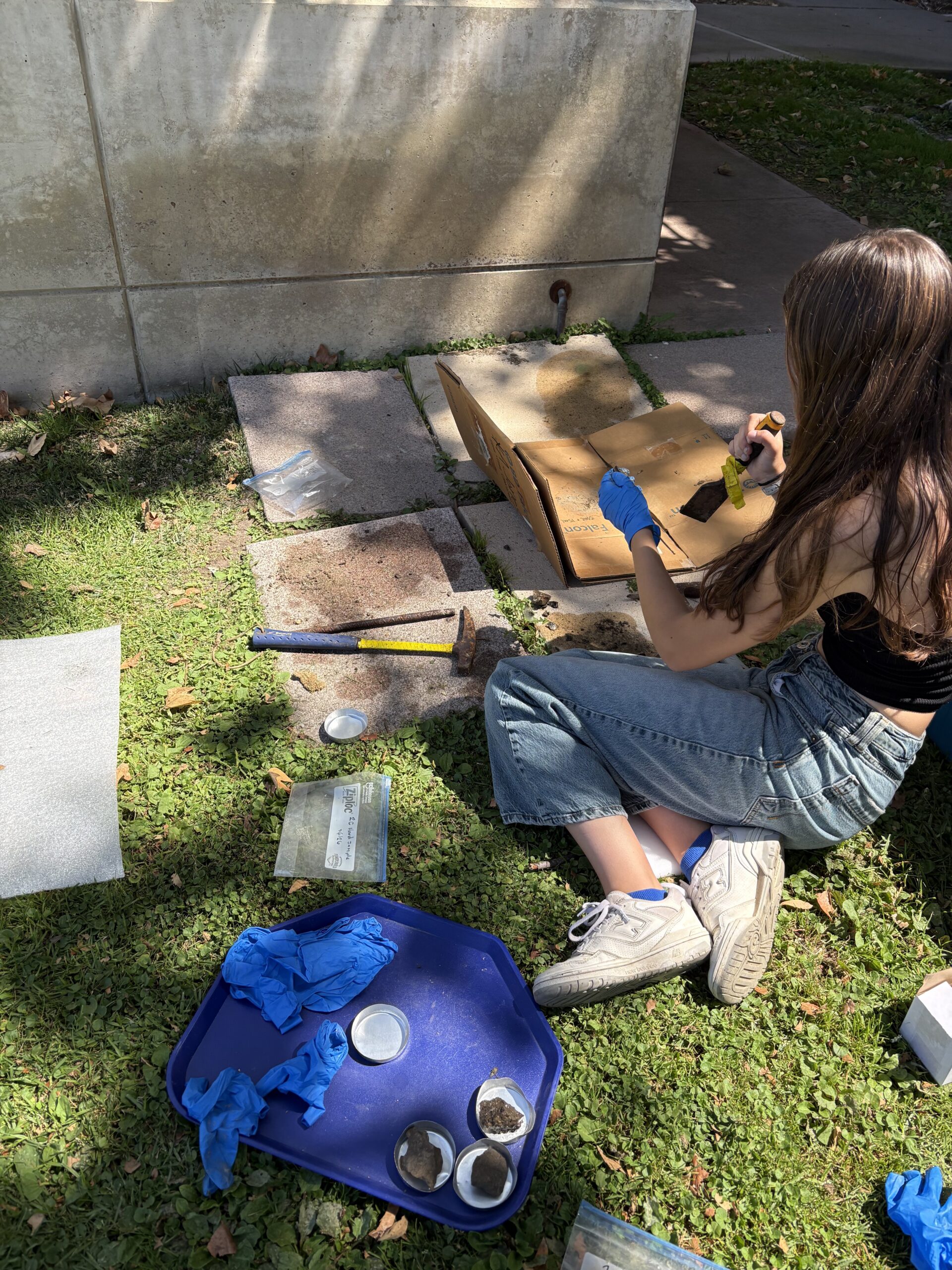
Lots of chipping away
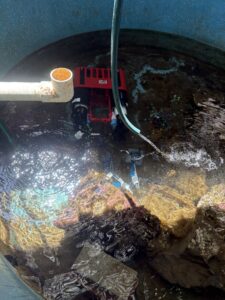
Thankfully, our calibration system eventually came back to life, and we were able to complete three calibration trials. Our first test used oxygen free water, which we created by adding a chemical tablet that removed the dissolved oxygen. The second uses fully oxygen saturated seawater by continuously pumping air through the water. Our final calibration used untreated seawater as a reference point. Once all of the sensors were producing consistent readings, we transported the system down to the clam tanks at Campus Point and got everything set up to begin collecting real data. This is how it looks in the tank!
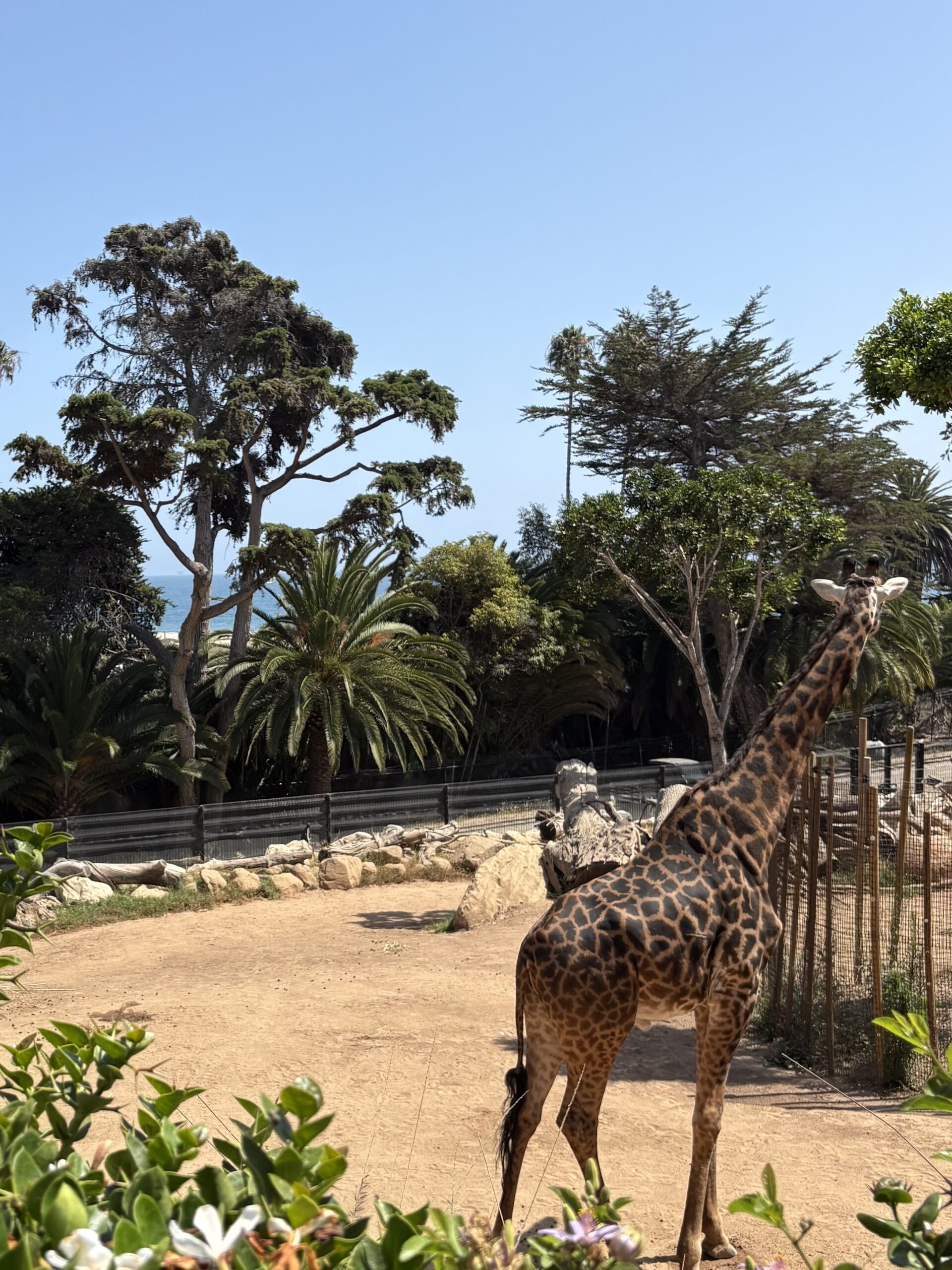
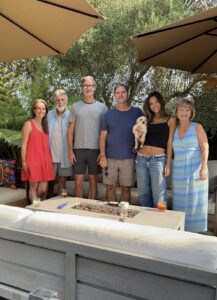
Outside of the lab, I’ve still been making time to explore Santa Barbara. I visited the Santa Barbara Zoo and was amazed by the variety of animals they have there. I’ve also spent plenty of afternoons swimming at the beaches that are practically in my backyard. One of my friends, Avalon, came down to visit this week, so it was great getting to catch up and spend time with her and Vito while enjoying everything Santa Barbara has to offer.
Another week has flown by, and I’m grateful for every opportunity to learn something new. I’m excited to see what next week has in store!

No Comments