
14 Jun Isaias Gutierrez, LASP, Week 2
Hello everyone! This second week at LASP was very interesting but very tedious. For designing and modeling, most people use CAD, which is a software that you can use to make 2D or 3D models. Just like other softwares many engineers and designers use its very usefull but it’s not user-friendly at all, ive never used it, and learning it was a very hard uphill slope.

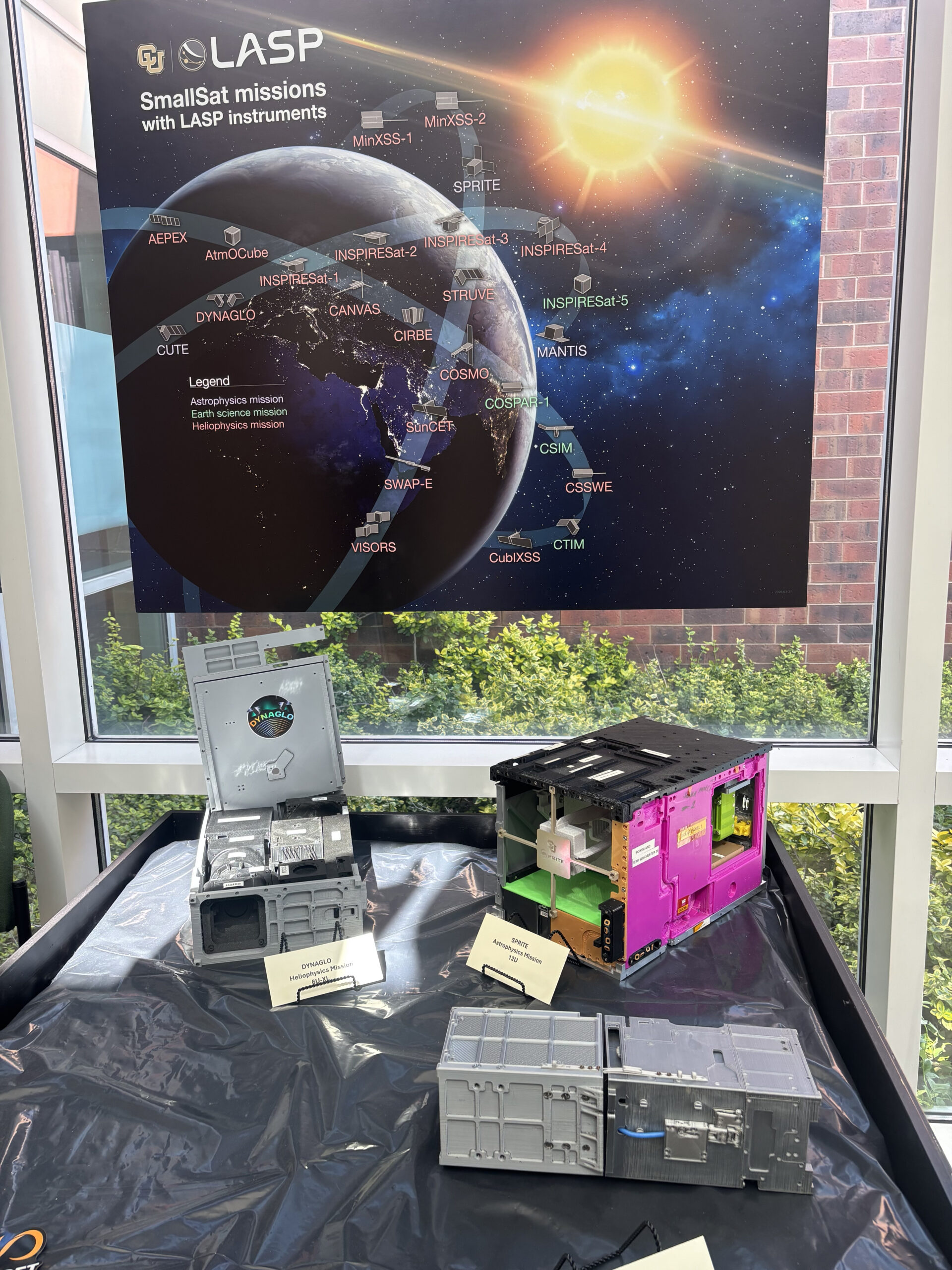
At LASP, the CubeSat SPRITE needs to be finished by the end of the summer, so it is currently being wrapped up, which means we are starting to work on a different satellite, MANTIS. Before each satellite is built, we make a 1-to-1 3D printed model. In this model, we like to connect the wiring to make sure everything fits before going into the cleanroom and seeing that something’s wrong. We like to measure the specific distances of each wire and decrease or increase them respectively to their position, for example, on a connection with a 90-degree turn, the inside wire closest to the wall would be smaller than the outside one. Our job in CAD is to design baseplates that connect the equipment on the model to the wires. To do this, we have to measure everything, measure it again, and then finally measure one last time. We start by making the four outside screwholes so we can connect the plate to the model. Then begin by finding the blueprints of the connector on their websites and adding in the measurements correctly. It seems like such a small and simple process, but it took us a lot longer than I ever expected.

Once we finished with that, we needed to order the parts online so they could be machined and sent to us in three weeks. We were a bit sceptical about our CAD skills, so we wanted to test out the designs another way. We started by going to another building and trying to laser-cut our panels out of paper. It was super interesting, but in the end it didn’t work out. Back to the drawing board we went!
After that setback, we tried to 3d print our designs. The one problem with 3d printing is that the nozzle is too big to be able to make the holes we needed. We required 0-80 holes, which is around the same diameter as 8 human hairs. We tried to print it five separate times with different thicknesses and different settings, but none of them worked out. Each one would become a scrambled ball of filament and completely unusable.
At the beginning of the week, we also 3D printed a holder for the analysis of asteroid grains that we started the week prior. The equipment that came didn’t have the right positioning and size to screw into the table, so we printed an adapter that connected to the holder and to the table.
Throughout the week, we also attended more ASTRO academy lectures, one about “Why go to space?” and the other about “How space travel is possible?” Alex and I also got passes to the CU recreation center and have been going
Overal this week has been a learning process but ultimately very fun and interesting.
No Comments