
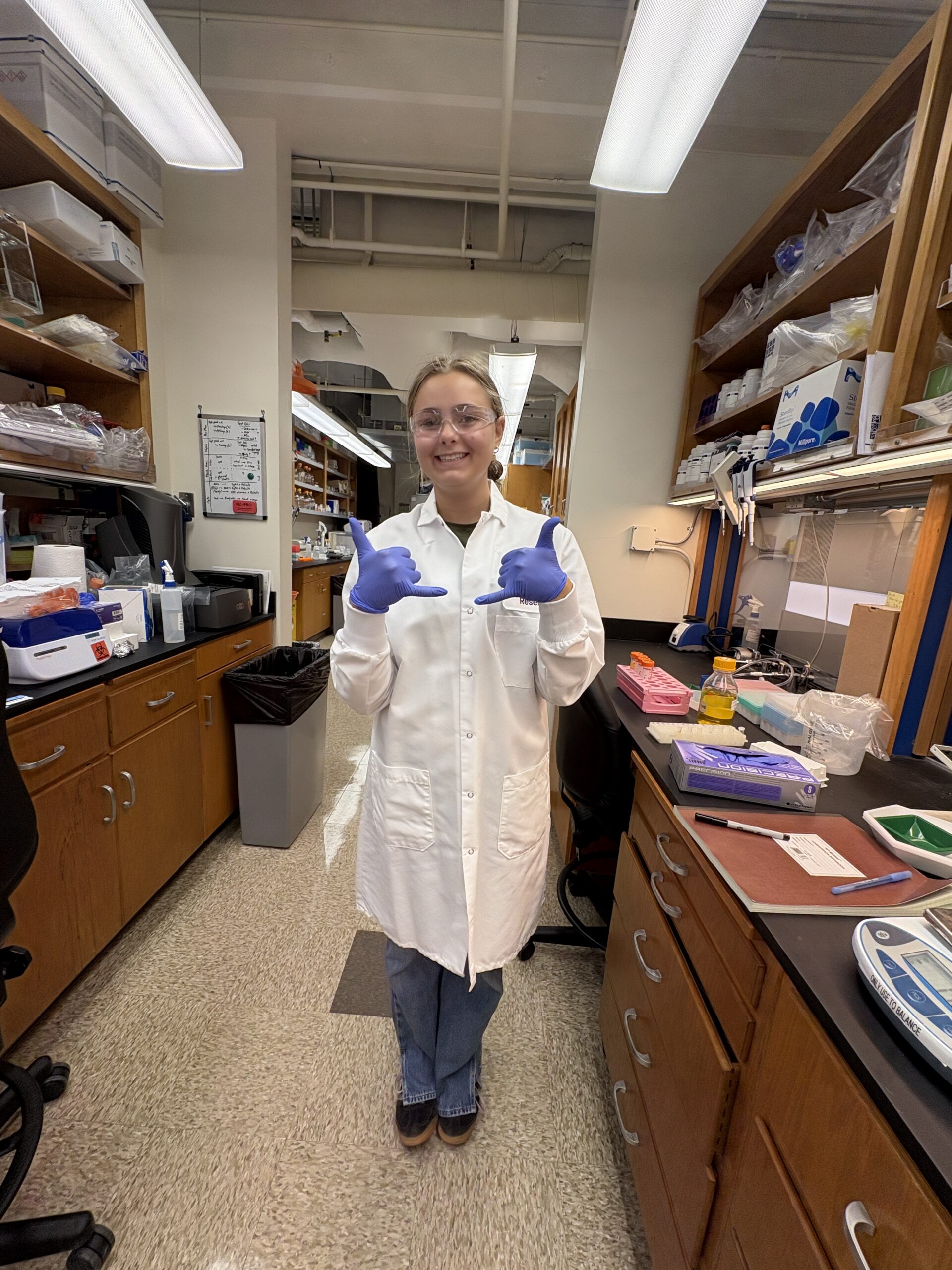
28 Jun Belle McTigue, Briney Lab TSRI, Week 1
Hello! My name is Belle McTigue, and this summer I am interning at the Briney Lab at TSRI (The Scripps Research Institute) in San Diego. The Briney Lab is a microbiology lab focusing on infectious diseases and antibodies. I will be working under Jonathan, a staff scientist, and two grad students, Dani and Nathan. Each mentor is working on a specific disease, all with different aspects, but they are all doing similar processes in the lab to achieve the desired results.
Monday: My first day at Scripps was a little slow; we began with orientation and getting our ID badges, making the internship very official. After a campus tour and IT training, we stepped foot into our lab. We were introduced to Terrance, Jonathan, Nathan, and Dani, our mentors for the next five weeks. Working in a lab requires basic training, and we endured. Ellie, Liliana, and I watched every training video with intent and determination to join the processes and hands-on lab work surrounding us.
Tuesday, we were thrown into a world of the central dogma of microbiology, the process of DNA to RNA to eventually proteins. I sat at my desk taking notes all morning, entranced by the specifics of what each process does and also questioning the things I still don’t fully understand. What I do know: it all starts with the immune system. Your body has two systems, innate and adaptive immunity. The Briney Lab focuses on the adaptive, as this immunity is highly specific to each antigen and has B cells and T cells as key players. Adaptive immunity also serves as the foundation for vaccinations. Specifically, the Briney Lab is trying to build viable antibodies that vaccines can be based on. Making an antibody starts by identifying the right sequence, the genetic instructions for the antibody you want. Those instructions are then codon optimized so that host cells (living cells cultured in a lab) can read them efficiently. Next, the sequence is cloned into an expression vector, which acts as a delivery package for the genetic code. That package is then transfected into living cells, giving them the instructions they need to start producing the antibody. After a few days, the cells express the antibody by secreting it into the surrounding media. After our long notes and questioning of reality, Nathan took us to the electron microscope to look at proteins of a specific antibody of T-cell leukemia. He prepared the sample by setting it on a disk the size of a seed and blasting it with plasma to prepare it for the microscope. Unfortunately, there wasn’t a viable amount of proteins; we found 3, and you need thousands. Although we weren’t successful on the microscope, we had a run-in with the scientist who helped develop the mRNA technology behind the COVID-19 vaccine, whose scientific curiosity back in 2012 was a key reason the vaccine was available so quickly after the pandemic began. Ellie, Liliana, and I left the lab with smiles on our faces and ready to celebrate Liliana’s birthday!
On Wednesday, we showed up at our lab ready. We started our pipette training, yes, this is key to the Briney Lab. A quote from Jonathan: “it looks like we just move around liquids, but all the magic is happening in the vials.” After our training, we were given our lab benches and coats. I have never felt so smart and cool in my life. Breaking news: lab coats are the coolest attire! We all dove into our first hands-on experience, moving orange water from one tube to another. This small exercise was a great way to introduce us to the fundamentals of lab work. We then got to go to our first lab meeting, where we listened to a practice research dissertation. I was both intrigued and confused at the same time. To end the day on a high note, Jonathan introduced us to primers, short overlapping sequences that bridge the plasmid and the genetically engineered sequence being inserted. We used a program called Geneious to look at the plasmids, which were specific to the Hanta virus. We were designing the overhang between the plasmid and the genetically modified strand we were going to insert, with the goal of eventually creating a viable antibody against the disease.
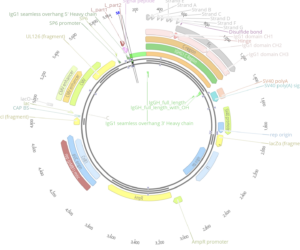
Plasmid on Geneious platform to code
Thursday picked up right where Wednesday left off. We got to work designing primers to add the necessary overhangs to the gene of interest before we introduced the Gibson assembly. The overhangs need to meet specific requirements: they need to have an nt between 18 and 25, have a melting temperature between 65–68 degrees Celsius, and have a GC content between 40–60%. We checked these requirements using a Tm calculator. We all eventually found some success, but this puzzle was hard to solve, and we edited for hours. Just as we were getting close, Nathan pulled us away to help him make buffers. Liliana, Ellie, and I worked alongside another high school intern, Umair, to make two buffers. Buffers are solutions that keep the pH stable so that proteins and cells aren’t damaged during experiments. The two buffers we made should last the lab a year, so we were very precise with our measurements.
 Friday felt like we were thrown to the wolves, in the best way possible. Jonathan handed us a protocol packet, pointed us to the tools, and said, “break stuff, not physically, but don’t be afraid to fail.” Our goal was to extract DNA from cells. The process starts by disrupting the tissue, then lysing the cells (bursting them open), and finally separating the DNA from the other unwanted components of the cell. This is done by adding a series of ZymoPure reagents and buffers, running the sample through a filter, and washing it. To check if we were successful, we measured the DNA concentration using a spectrophotometer, which reads concentration based on how much light the sample absorbs. We all succeeded, getting concentrations in the 40–60 ng/µL range, viable for a mini extraction Nathan was impressed and invited us to repeat the process on a larger scale with two disease samples he works with. We were thrilled when our concentrations came back in the thousands ng/µL range, what we want for a Maxi scale of ZymoPure. Before the end of the day, we were introduced to the beginning of the transfection process, delivering the DNA we had just extracted into cells to start instructing them on how to produce an antibody.
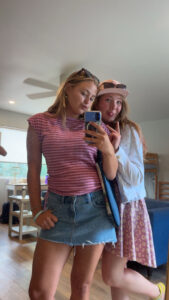
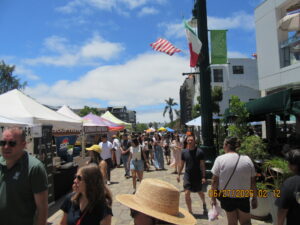
After a long week of science and hard work, the house decided to go to the movies and have a chill night. Living with five other pinterns has been an experience in itself; we have learned what our house mom calls “radical independence,” but also filled the house with laughter and good vibes. Over the weekend, we traded our lab coats for bikinis and sandals, exploring farmers’ markets and beaches around San Diego!
Beverley McTigue
Posted at 10:42h, 29 JuneBelle…first I am so impressed with your writing, second with your excitement for what you are learning, and lastly your courage to step into a whole new world. Good for you!
Love Bevy