
05 Jul Cricket Kees, U of Houston Chemistry, Week 5
Hello all to my final blog post of the internship! This last week has been short and sweet, as I scrambled my way through analysis of the spectra of my samples, finishing up my poster presentation, and saying my final goodbyes to all the friends I made along the way. In the beginning of the week, I started by making an outline of my poster and sending it to Professor Baldelli for him to look over. I wasn’t originally sure of exactly what information I would present as my project, so I went over lots of discussions with him and many rough drafts of the poster.
Eventually, I finally got a good idea of what information I would include on the poster. Since the main question behind making metal films and metal solutions with cyanide was to develop an understanding of the chemical bonding properties of cyanide onto metal surfaces, I based my whole poster on that subject. Additionally, it is a question that many of the Grad students in Baldelli’s lab are working on, namely Sarah Ortiz whom processed all of my metal films and later sent me the readings of them. The process of cyanide bonding to metals is useful in creating new molecules, and moreover the surface chemistry about cyanide bonding to thin films of metal is something that isn’t well researched and therefore no conclusions have been made. But, by applying my knowledge of spectroscopy to the metal film samples spectra readings compared to the liquid metal solutions, I can use that research to get a conclusion of my project. Even though I couldn’t draw conclusions of the exact chemistry, since that requires years of studying, I could use the information I learned and the samples I made to help Baldelli’s lab make more discoveries.
Just like how we used Raman lasers to analyze the liquid samples of metal and cyanide, we used an SFG (sum frequency generating) laser to analyze the films. The reason why we use different lasers is because Raman lasers only process solution based molecules, versus SFG which only analyzes surfaces (like the metal films). Since both of the samples have different chemical equations, we can compare the spectra of the two (solution vs films).
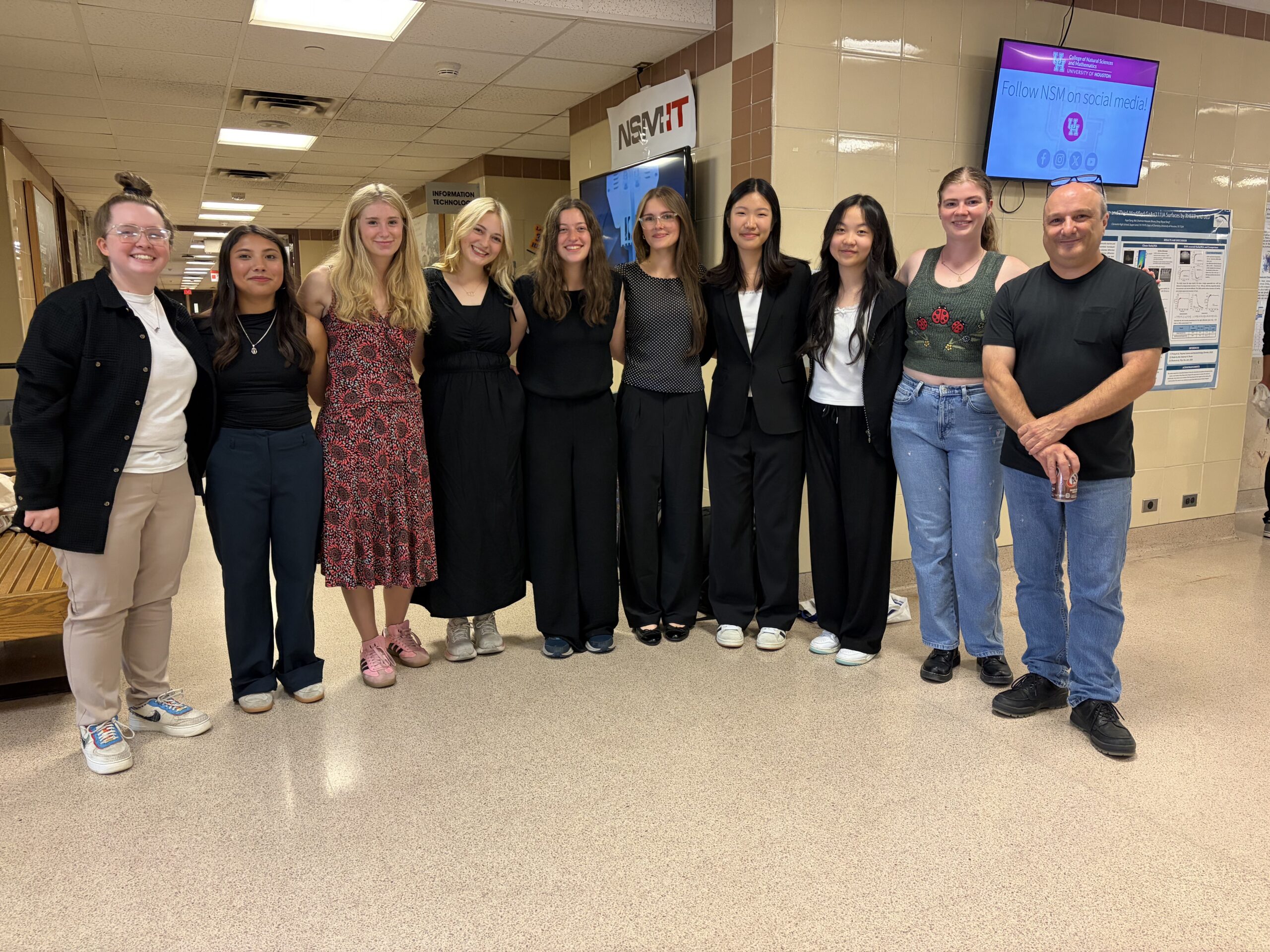
As I worked on completing my poster work,I collected all the extra data I could, as well as an addition to the research about the copper and silver films and solutions, I made two other films of “patterned metal”. The process of making these patterns was similar to the process of making an ordinary film, except once the plain film is made you place a pattern (somewhat like a stencil) over the film and then layer an additional metal on top of it. I made one with silver patterned over a copper film, and the other was copper patterned over a silver film. Finally, after I put all the data and analysis on the poster, we hung them on the walls of one of the buildings at the University and got to talk about our projects to grad students, post docs, professors, and a few undergrads. Also, many parents of the high school students apart of the welch program came, since it was the last day of the program. It was super hard to say goodbye to all the friends I made along the way, but it was a great experience and I appreciate the opportunity I got to meet each person and broaden my knowledge.
No Comments