14 Jun Stella Coe- UCSD George Lab- Week 1
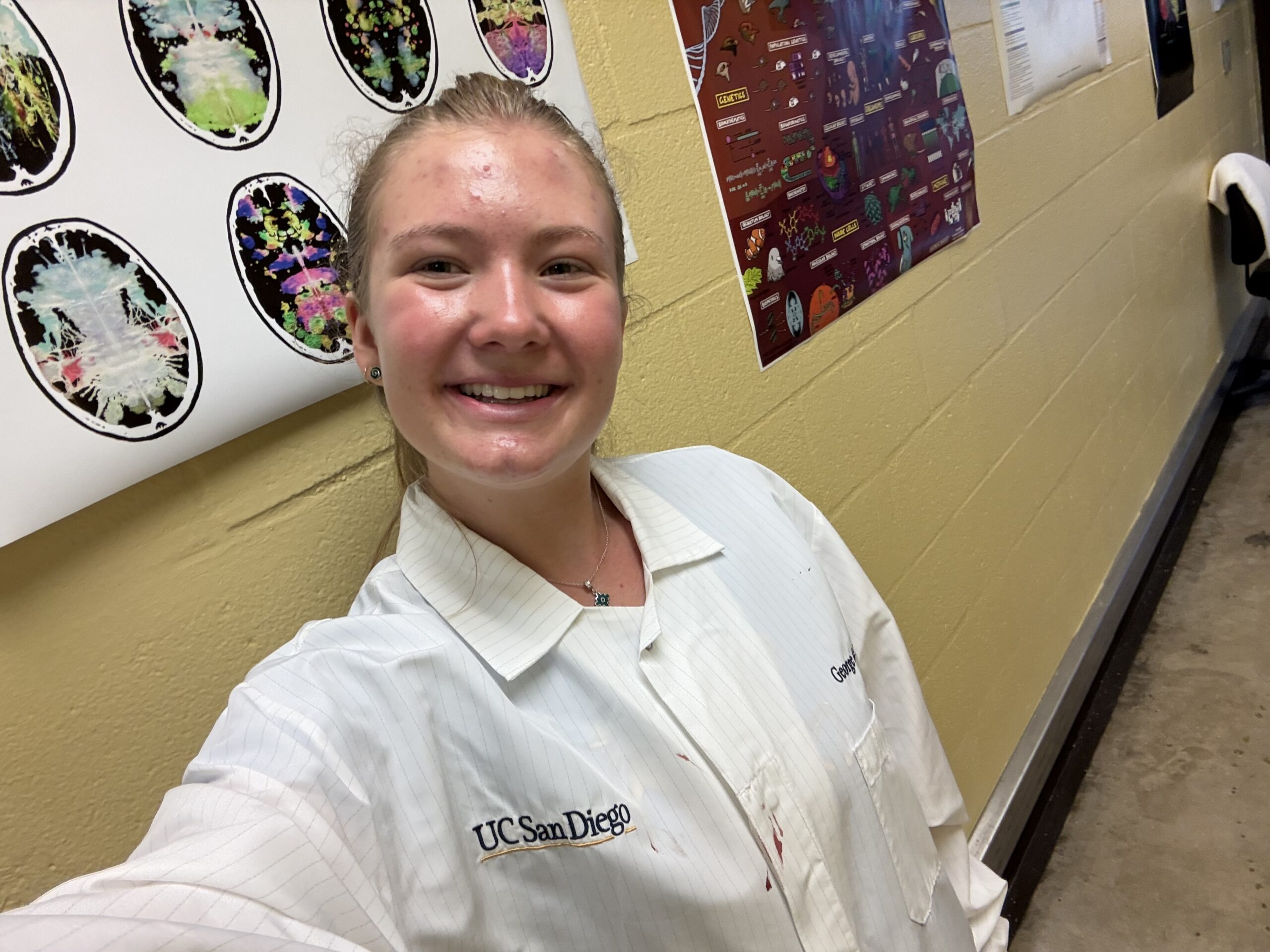
Hello! My name is Stella Coe, and this summer I have the opportunity to be a Pintern at the George Lab at UC San Diego. The George Lab focuses on neuroscience and addiction research, studying how substances like cocaine, oxycodone, and alcohol affect the brain and behavior. Throughout this internship, I’ll be documenting both the science I’m learning and the personal experiences that come with stepping into the world of research for the first time. From behavioral testing with rats to data analysis to late-night beach walks with the other interns, this blog is a look into my summer as a Pintern and everything I’m learning along the way.
Monday, June 8 — Day 1
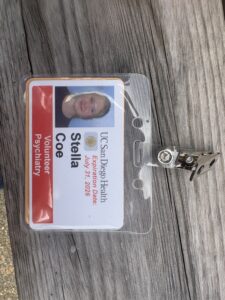
My first day at the George Lab felt so surreal in the best way possible. The morning started with getting my official badge photo taken and receiving a lab coat, which instantly made everything feel a lot more real and professional. We toured different buildings around campus so we could get our bearings and learn where everything was located. UCSD is huge, so figuring out the campus definitely took some time. I also met some of the people I’d be working with, including Sonja Plasil, Selene Bonnet Zahedi, and Molly Brennan, who became some of my favorite people in the lab.
One thing that I noticed right away was how much organization goes into research. Before any experiments even happen, there’s constant setup, cleaning, labeling, organizing supplies, and checking procedures. Kaila and I helped Molly clean the rat operant boxes (the boxes the rats are placed in during their oxycodone self-administration), replace bedding, organize catheters, prepare HydroGel (the stuff rats eat to stay hydrated), and scan the rats’ “microchip” to make sure they were placed in the correct operant conditioning boxes. Each rat has its own identifying number and belongs to a specific cohort, and timing is extremely important because the rats operate on controlled dark/light cycles. Since rats are nocturnal, the timing of experiments can directly affect behavior and results.
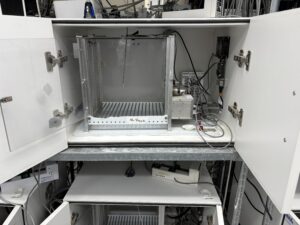 -Rat operant boxes. The small metal tube in the center is the catheter that attaches to the rat.
I also got to see the rats for the first time. I definitely noticed the smell immediately, but after a while, I got used to it. Molly explained some of the behavioral procedures used in the lab, including ShA (short access), where the rats are exposed to the drugs 1 hour a day, and LgA (long access), where the rats are exposed to the drugs for 10 hours a day. They are both methods used to study addiction-related behavior and relate it to the length of time the rats have access to the drugs. The rats have self-administration when it comes to consuming the drugs, meaning they press a lever and they decide when they want the drug. We are never force-feeding the rats drugs.
The rats that are tested for oxycodone and saline have catheters that allow the drugs/saline to flow into their system intravenously, mimicking an injection. To make sure these catheters work, Molly showed us the Brev test, where she injects a drug that makes the rats faint briefly. If the rat does not pass out, then they fail the test and is removed from the experiment.
The atmosphere in the lab was much more welcoming than I expected. Even though I accidentally got dropped off at the wrong building and showed up late, everyone was so understanding. We ate lunch outside on the grass in the San Diego sun, and it felt strange that this was actually my “job” for the summer.
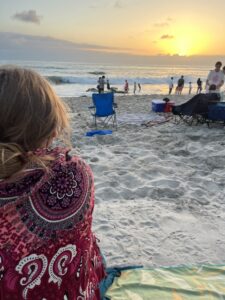
After work, the other Kaila and I headed to the beach. We packed Caesar salads for dinner and walked along the shoreline during sunset. On the walk back, we stopped for ice cream and saw a sign that said, “Shorten the wait. Ask the guy in front of you to buy your ice cream.”I dared Kaila to ask the guy ahead of us, and unexpectedly, he said, “I’d love to, and does your friend want one too?” It completely made my day and ended my first day in San Diego perfectly.

Tuesday, June 9 — Day 2
By the second day, I already felt more comfortable navigating the lab. I spent most of the morning helping Molly clean cages and replace bedding before joining a weekly Zoom meeting where all of the George lab team shared updates on their progress.
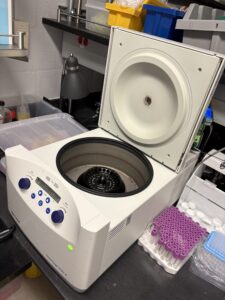
Later in the morning, Molly taught me more about one of the blood collection procedures used in the lab. We labeled tubes that would later be used for blood samples collected from ethanol-exposed rats. During this procedure, a very small sample of blood is collected from the rat’s tail and placed into collection tubes. The tubes are then put into a centrifuge, a machine that spins samples at extremely high speeds to separate substances by density. In this case, the centrifuge separates the heavier red blood cells from the lighter plasma. The plasma can then be analyzed to measure alcohol content and other biological markers using more advanced lab equipment at Scripps.
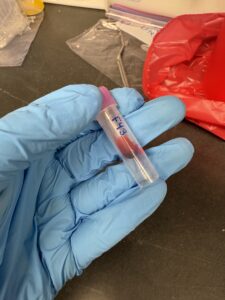 -This was one of the blood samples that was taken from a female rat. If you look closely, you can see the darker red blood cells at the bottom and the plasma sitting on top.
-Below is a centrifuge.
One of the most exciting parts of the day was overhearing a conversation about the Von Frey test and being invited to help as the note taker the next day. Before Kaila finished her tasks for the day, I spent time reading about the procedure and organizing papers for Sonja’s lab notebook, which helped me better understand the purpose behind the experiments happening in the lab.
I also got to see drunk rats for the first time, and it was hilarious. They would just flop in your hand and do not have a care in the world.
Before work, Kaila and I went to the gym for the first time since arriving in San Diego, something that we are working to do every day.
Wednesday, June 10 — Day 3
Wednesday was one of the busiest and most fascinating days so far. I spent the morning as the note taker during a Von Frey behavioral test. The Von Frey test is used to measure pain sensitivity and mechanical sensitivity in animals. During the procedure, thin fibers with calibrated force are gently pressed against the rat’s paw to determine the point where the animal reacts or withdraws. Researchers use these responses to study pain thresholds, withdrawal symptoms, and how substances affect the nervous system.
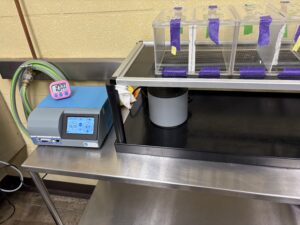 -This is what the Von Frey test setup looks like. Notice the cylinder placed underneath each box. It has a small metal fiber sticking up from it that pokes through the mesh and onto the rat’s paw.
Later in the morning, I helped Molly prepare for a collaborative dissection and perfusion procedure involving cardiac function research. My role was mainly to document the procedure step-by-step while observing everything happening in real time. The process involved euthanasia, opening the chest cavity, perfusing the rat with PBS and paraformaldehyde (PFA), monitoring lung inflation, and checking whether the organs were fully perfused. I learned that successful perfusion causes organs to appear pale or white because the blood has been fully replaced by the solution. Watching the procedure was intense, but it also showed me how careful animal research has to be.
Later that day, we collected blood samples from rats by making a very small cut at the tip of the tail and collecting droplets into tubes. Afterward, the blood was spun in a centrifuge so the plasma could be separated from the red blood cells. Using pipettes, we transferred the plasma into separate tubes and test strips for later analysis.
One of the coolest parts of the day happened when I walked over to the Skaggs building where Kaila was working. I got to see rat brains, mouse brains, and even a fully cleared mouse brain that looked almost transparent — like a gummy bear. We also used a brain imaging system to look at different sections of the brain, which was incredible to see up close.
By the end of the day, I was exhausted. I had been awake since early morning, so I took a nap while tanning under the San Diego sun, and later we finally went fully into the ocean for the first time since arriving in San Diego- it was cold, but it was worth it.
Thursday, June 11 — Day 4
Thursday was another long lab day centered around behavioral testing and data collection. I spent most of the morning helping with Von Frey testing for two different cohorts of rats. Since I had already observed the procedure the day before, I felt much more confident understanding what the researchers were looking for and how behavioral responses are recorded.
Throughout the day, we also collected additional blood samples and analyzed our data from the Von Frey testing sessions.
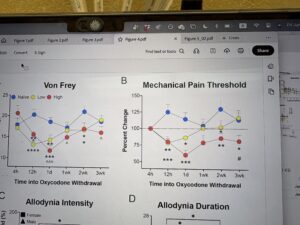 -This was some previous data collected. Blue dots are naive rats. Yellow is low addicted rats. Red is rats are highly addicted. Notice how their pain threshold differs across how much time they have been in withdrawal.
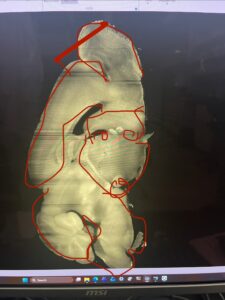
Later in the afternoon, I watched Kaila as she worked with mouse brain images, trying to correctly line up different brain sections. It was like solving a puzzle. We had fun seeing the different figures in the brain- there were bunny rabbits, Grinches, and even a buff owl meditating. (Don’t ask)
A major focus of the day was observing withdrawal symptoms in rats. Researchers monitor both somatic symptoms (physical symptoms) and behavioral symptoms to better understand how addiction and withdrawal affect the body and brain.
The lab day ended later than usual, and we didn’t leave until around 5:30. Afterward, we welcomed another intern, Zoe, to the house before making a chaotic Costco run together. Living with the other interns is honestly one of my favorite parts of the experience because even after long days in the lab, there’s always something funny happening.
Friday, June 12 — Day 5
Friday was a combination of science, recovery, and catching up on life. The morning started with another Von Frey session while I continued learning more terminology related to pain sensitivity, including the difference between allodynia and analgesia.
One of the tasks is refilling ethanol supplies used in experiments. I learned that the rats go through ethanol surprisingly fast.
Luckily, Friday was only a half day, which gave me time to catch up on normal life things. I went to the gym, accidentally parked on a curb while parking, completed two weeks’ worth of PE assignments (I am taking PE online so I don’t have to spend my senior year doing it lol), and finally got my car washed (everyone’s car is pretty clean in the city, and I came from the mountains, so… it felt necessary)
I am so surprised how quickly yet how slowly this week went by. I did and learned so much, but then again it’s already over. So far, I am loving my time in San Diego- the warm sun, super friendly people, beaches, and of course the George lab. I’m so grateful to be here, and I can’t wait to keep working.
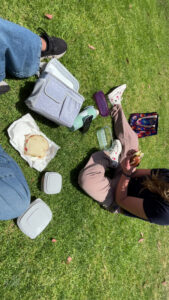
Our lunch break.
No Comments